Casinos That Accept Debit Cards in the UK
 Available in GB
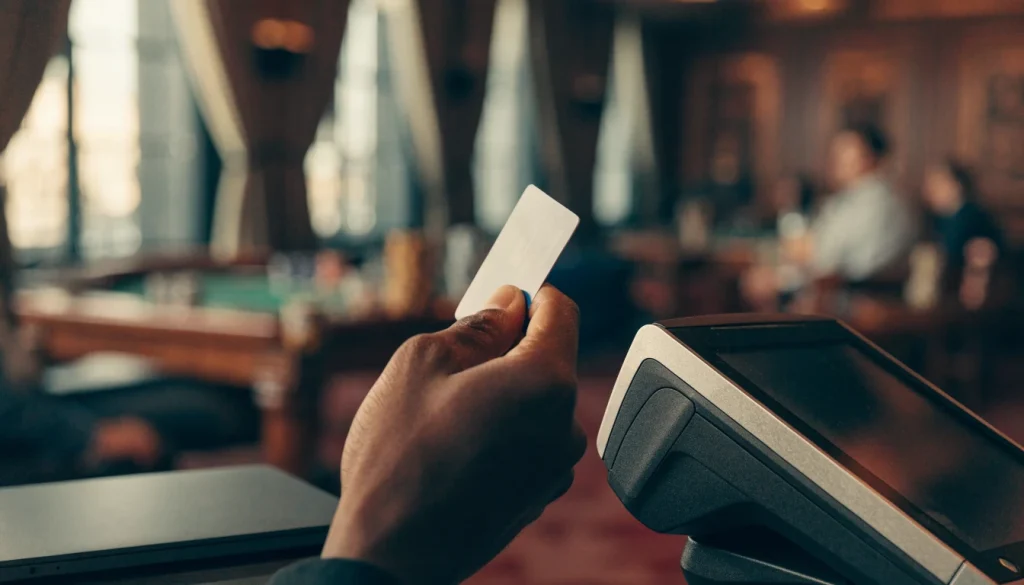
UK casino debit card payments connect an account to funds held through a bank, with acceptance and transaction timing varying by site.
Table of Contents
- Debit Cards in the UK Online Casino Cashier
- What Makes a Debit Card Casino a Better Fit
- Making a Casino Deposit by Debit Card
- Checking Whether a Casino Accepts the Card
- Why a Card Deposit Can Be Faster Than a Card Withdrawal
- Debit Cards, Credit Cards and the UK Gambling Rule
- The Real Cost of Paying by Card
- Using a Debit Card to Play Online Slots
- Card Availability Can Differ Between Casino Sites
- Keeping Visa Payments on a Clear, Secure Route
- Memebet Casino Deposit Limits and Supported Payment Gateways
Debit Cards in the UK Online Casino Cashier
A debit card has a familiar place in the UK online casino cashier. Visa and Mastercard are commonly accepted, making card payment one of the recognisable ways to connect a casino account with money held through a bank. The arrangement is unremarkable by design: a piece of everyday financial infrastructure brought into a setting that is anything but everyday for everyone who uses it.
That familiarity matters. A casino cashier can present an assortment of payment names, each with its own vocabulary and conditions, while a debit card is already part of ordinary life for many people. It is not a special gambling instrument. The same card may be used for routine purchases elsewhere, so its appearance in a casino account does not change what it is: a payment method tied to the cardholder’s bank arrangements.
For that reason, searches for an online casino with debit card access often point to a straightforward question about compatibility, rather than a desire for a new kind of financial product. The phrase “debit card casino online” can sound like a category of casino, but the distinction is usually in the cashier: whether card payment is among the methods offered to customers. In the UK, Visa and Mastercard are commonly accepted across casino sites. That makes them part of the standard payment landscape, not a guarantee that every card will work in every account.
When choosing a UK casino that accepts debit cards, check the payment options and withdrawal terms that apply to your account. The details below include each operator’s stated payout speed.
1. Chanze
Payout speed: 1-3 business days Chanze lists a payout speed of 1–3 business days.
2. Zombillion
Payout speed: 1-3 business days Zombillion lists a payout speed of 1–3 business days.
3. WinBeast
Payout speed: 1-3 business days WinBeast lists a payout speed of 1–3 business days.
4. Revery Play
Payout speed: 1-3 business days Revery Play lists a payout speed of 1–3 business days.
5. Amunbet
Payout speed: 1-3 business days Amunbet lists a payout speed of 1–3 business days.
6. EvoSpin
Payout speed: 1-3 business days EvoSpin lists a payout speed of 1–3 business days.
7. Dieselwin
Payout speed: 1-3 business days Dieselwin lists a payout speed of 1–3 business days.
8. Britsino
Payout speed: 1-3 business days Britsino lists a payout speed of 1–3 business days.
9. Jetsetspins
Payout speed: 1-3 business days Jetsetspins lists a payout speed of 1–3 business days.
10. NightWin
Payout speed: 1-3 business days NightWin lists a payout speed of 1–3 business days.
The cashier is where the abstract becomes practical. A site may describe its payment options in broad terms, but the available methods are presented within the account itself. A debit-card option there is not a promise about all banks, card products or circumstances. Nor does the presence of a familiar logo tell the whole story of how an account is managed. The logo identifies a payment network; the transaction still sits within the casino’s own systems and the customer’s banking arrangements.
There is a small cultural history in that ordinary appearance. Cards helped turn payment into a quiet, repeatable act: a tap, a number, a confirmation, with the movement of money made less visible than the movement of cash. Online gambling adopted that convenience along with much of the retail world. The cashier borrows the language of shopping, even though the activity behind it is different. The interface can make a decision feel like a routine transaction. It remains a gambling transaction.
This is one reason a debit-card online casino should not be understood as a special class of venue. It is an online casino whose cashier includes card payments. Visa and Mastercard are the names most likely to make that description legible to a UK customer, because both are commonly accepted. The general pattern is clear; the details belong to each account and cashier rather than to a universal promise about every card.
The distinction is useful because payment logos can invite assumptions. A familiar brand can suggest that acceptance is automatic, or that the same experience will follow wherever the logo appears. Neither follows from familiarity alone. A payment route is part of the relationship between a customer, a casino and the financial services involved. Its presence in a cashier tells what is offered there, not what every issuer will permit or how every transaction will be treated.
Casinos That Accept Diners Club in the UK
In Britain, remote gambling is legal at sites holding the relevant UK Gambling Commission licence. That regulatory setting gives the online casino cashier a more formal role than a simple checkout window: it belongs to a service operating under rules for remote gambling. Yet a licence does not make the payment choices identical from one site to another. Nor does it turn a payment method into an endorsement of gambling. Regulation sets conditions around the service; it does not erase the personal and financial character of the decision.
The search for the best debit-card online casino, or even the best debit-card online casino sites, can therefore mislead if “best” is taken to mean a universal winner. A card being commonly accepted is a useful starting point, not a verdict on the rest of a casino. The payment method alone says little about the wider account, the games or the terms attached to other parts of the service. Ranking sites on a single familiar logo would be tidy. It would also be thin.
For a first overview, the essential point is modest: UK casinos commonly accept debit cards, including Visa and Mastercard. An online casino debit-card deposit is simply the use of that recognised payment route within a gambling account; the card does not itself determine the nature of the casino or settle every question about how the account works. The cashier is the visible meeting place of ordinary banking and online gambling. Familiar, but not interchangeable.
What Makes a Debit Card Casino a Better Fit
A useful payment route is not necessarily the one with the longest list of logos beside it. It is the one that fits the account a player actually uses, the way money is managed, and the purpose of the casino account. For some, that means a familiar debit card linked to a current account. For others, a different route may make more sense. “Best” is less a ranking than a question of compatibility.
The first distinction is between a payment method that appears in general information and one that suits a particular account. Specialist reviews may list Visa and Mastercard among the methods associated with casinos, but those descriptions do not establish that every card product will work for every customer. Card eligibility and current availability belong to the individual cashier. A list can be a starting point; it is not a promise.
Casinos That Accept Wirecard in the UK: Payment Guide
Fit also depends on whose name appears across the account and payment details. A casino account opened in one person’s name and a card belonging to another creates an avoidable mismatch. Using account information and a payment route belonging to the same customer makes basic ownership checks more straightforward. It is a small piece of administrative neatness, but gambling payments are not improved by needless ambiguity.
That does not mean every player needs a separate card for casino use. The more practical question is whether casino transactions can be recognised and managed within the person’s existing financial arrangements. A card linked to an account used for household bills, for instance, may offer a clear transaction record but less separation between leisure spending and ordinary commitments. A dedicated account could make that distinction easier to see, though it brings its own need for oversight. The right arrangement is the one that makes spending legible rather than merely giving it another place to hide.
A debit card casino deposit should therefore be considered as part of a wider account routine, not as an isolated button in a cashier. The card may feel familiar because it is already used for ordinary purchases; familiarity, however, is not the same as suitability. Someone who reviews account activity regularly may find card transactions easy to track. Someone who prefers to keep discretionary spending apart from essential outgoings may value a different structure. These are personal financial habits, not qualities that a casino can supply.
There is also a difference between having a preferred payment route and relying on it without checking its role. A payment option may be convenient for one transaction but not serve every purpose attached to an account. The cleanest arrangement is often one named account used consistently for deposits and withdrawals. Consistency can reduce confusion over ownership and make the movement of funds easier to follow. It is not a guarantee that every transaction will proceed without checks; it is simply a less tangled starting point.
Do
- Use a payment route belonging to the same person as the account holder
- Use a dedicated account to separate leisure spending from essential outgoings
- Maintain a consistent named account for deposits and withdrawals
Don’t
- Use a card belonging to another person to fund the account
- Rely on a payment method without checking its specific role in the account
- Use a separate account that is rarely reviewed for financial oversight
The word “casino” can make these choices sound like matters of entertainment alone. In practice, the payment route belongs to the less glamorous machinery of online gambling: records, account identity and financial boundaries. The UK’s regulatory approach places formal limits and controls around remote gambling, but a sensible personal arrangement still matters. A card that is easy to monitor may be more suitable than one that is merely familiar, while a separate account that is rarely reviewed may achieve little beyond another password.
Comparing casino sites on payment fit should avoid treating a method’s presence as a verdict on the whole service. A card logo does not explain how clearly the operator presents its terms, how the account is organised, or whether the payment route matches the customer’s own banking setup. Nor does a long menu of alternatives necessarily make a site more suitable. More choice can be useful; it can also turn a simple decision into a display cabinet.
A better assessment is modest and specific: does the account belong to the same person, can transactions be recognised, and does the payment arrangement suit the way gambling funds are kept separate from other spending? Those questions do not produce a universal list of the best debit card casino sites. They produce something more useful: a basis for judging whether a particular route fits a particular person, without confusing a familiar card brand with a sound financial arrangement.
No universal winner.
Making a Casino Deposit by Debit Card
A debit-card deposit is a transfer from the bank account linked to the card into a casino balance. The amount entered at the cashier is not necessarily the amount the account can accept: the operator’s minimum and maximum, the payment method’s rules and the customer’s account settings can all shape the transaction. The cashier is therefore not just a doorway. It is where several limits meet.
Casinos That Accept Bitcoin in the UK: Fees & Payouts
A specialist review reports that minimum deposits can begin at £10–£20, with the precise starting point depending on the payment method. That range should be read as a reported guide, not a fixed tariff for every casino or every card. The minimum shown for a particular route is the operative figure; entering less may leave the transaction unavailable, while entering more does not mean the payment will automatically be approved.
Maximums can be set at different scales: for one transaction, across a day, or across a month. They vary with the method and the status of the account. A card route may therefore have a ceiling that differs from another route at the same casino, while account-level circumstances may affect what is available to an individual customer. The cashier’s stated maximum, rather than a general figure elsewhere, is the relevant boundary for that deposit.
The payment amount also sits alongside a separate set of personal financial controls. UK Gambling Commission rules require remote gambling operators to ask new customers to set a financial limit before making their first deposit. Operators must also make account-level limit controls accessible. These are not simply another version of the card’s transaction ceiling: a payment limit governs what can be sent through a route, whereas a financial limit is a customer’s control over gambling expenditure.
That distinction matters. A transaction may fall below the card’s maximum and still be blocked by a limit set on the account. Equally, a payment method’s maximum does not define what a customer has chosen to permit overall. The two controls answer different questions, and treating them as interchangeable makes the cashier harder to read than it needs to be.
Making a Deposit
Step 1: Select Route
Choose the debit card payment route within the casino cashier.
Step 2: Enter Amount
Input the sum, ensuring it falls between the operator’s minimum and maximum limits.
Step 3: Verify Controls
Confirm the amount aligns with any financial limits previously set on the account.
Step 4: Confirm Payment
Complete the transaction sequence to transfer funds from the bank account to the casino balance.
Limits also give the deposit screen a role beyond processing money. UK rules place a pause at the threshold of the first deposit: before funds enter the account, a new customer must be prompted to set a financial limit. Once the account is open, the controls must remain accessible. The system is not meant to make restraint an obscure setting discovered only after a problem has grown; it is part of the account’s ordinary structure.
A deposit by debit card casino process is generally presented as a sequence of choices: select the card route, enter an amount, and confirm the payment. The precise screen varies, but the important point is that the amount should be considered against both the payment route’s displayed boundaries and the account’s own financial controls. A successful card authorisation does not cancel a limit already applied at account level.
Nor should a declined or unavailable amount be treated as evidence that the card itself has failed. The requested sum could exceed the transaction maximum, fall below the minimum, or conflict with an account limit. Those possibilities are distinct, even if the screen’s message is brief. Reading the amount and limit information before confirming can prevent repeated attempts that do not address the actual restriction.
The practical discipline is modest: choose an amount that fits the displayed terms and the account’s chosen controls, rather than treating the maximum as a target. A casino deposit with a debit card is still money leaving a bank account, and the cashier’s convenience does not change that basic fact. Limits are most useful when they are set deliberately, before the pace of play supplies its own logic.
Casinos That Accept InstaDebit in the UK
The UKGC requirement applies to the account, not only to one card or one deposit. Accessible controls make it possible to manage the financial boundary independently of the payment route. That is a notably unromantic feature of a gambling account. It is also the point.
Checking Whether a Casino Accepts the Card
A payment-method logo on a casino page is a starting point, not confirmation that a particular debit card can be used. A specialist review may list Visa and Mastercard among a site’s options, but that description cannot establish current availability for every UK account or every card product. The cashier is the practical test: it shows the methods the operator makes available for the account at the time of the transaction.
That distinction matters because a brand name covers more than one kind of card. A casino may list Visa or Mastercard while a particular card product is not eligible. The general payment page does not necessarily explain that boundary, and a familiar logo does not override it. The method shown in the cashier, together with the card-product conditions stated by the operator, is more useful than a broad claim that the casino accepts debit cards.
A careful check begins with the account rather than the logo. The selected site and the account must be for the UK market; payment options can differ by market, and a description written for another country does not settle what is available to a UK customer. Then the cashier can confirm whether Visa or Mastercard is displayed as an option for that account. If the method is absent, a general page listing it is not enough to treat the card as accepted.
Card Acceptance Check
- Verify the casino is licensed for the UK market
- Confirm Visa or Mastercard is displayed in the live cashier
- Ensure the specific card product meets the operator’s conditions
- Check that the account currency is set to GBP
There is a second detail worth checking before any transaction: the account currency. Specialist descriptions of casino payment pages may state that GBP is supported, but the account’s own currency setting still needs confirmation. A British address or a UK-facing site does not, on its own, prove that the account has been opened in pounds. If the account is denominated in another currency, the card payment may involve conversion rather than a straightforward GBP transaction.
This is not merely a matter of tidy bookkeeping. A payment can appear to have gone through while the amount is converted between the card’s currency and the casino account’s currency. Confirming GBP in the account before the first transaction helps avoid that mismatch. The cashier and the account settings answer different questions: one shows whether the card route is available; the other shows what currency the account uses.
Payment descriptions also age. Operators can change which methods they present, and eligibility can depend on the card product rather than on the network name alone. A page that once named Visa or Mastercard may therefore be less current than the options shown in the live cashier. The logo remains reassuringly familiar. It is not a receipt.
For a casino with debit card access, the useful evidence is consequently specific: the UK account is active, the cashier offers the relevant card network, the card product meets the stated conditions, and the account currency is understood before payment. Those checks establish whether the route is available for that account, rather than whether debit cards exist somewhere in the operator’s general payment menu.
Why a Card Deposit Can Be Faster Than a Card Withdrawal
A debit-card deposit and a casino withdrawal may use the same card, but they are not mirror images. Money going in can be authorised as part of the payment, while money coming out has to pass through the casino’s approval process before it reaches the card. The familiar card logo does not make the two journeys equally quick.
A specialist casino review describes card deposits as potentially instant, while a payout to a debit card may take several business days. That is a reported possibility, not a timetable that applies to every casino or transaction. The operator’s processing arrangements and the account’s verification status affect how long a withdrawal takes.
Casinos That Accept iDEAL in the UK: What to Check
The difference is partly one of control. A deposit credits the casino account after the payment is accepted. A withdrawal is a request to release funds, and the casino must first review it. For a new customer, the first payout may involve additional checks while the operator completes KYC. If documents or account details still need to be verified, approval can take longer. Once the casino has authorised the payment, the card provider’s handling of the transfer is another part of the journey.
This is why “fast withdrawal” can describe only one stage, or a particular site’s process, rather than a guaranteed arrival time. The clock may include the casino’s review as well as the time taken for the payment to reach the card. A specialist review notes that both internal approval and completed verification can influence speed; neither is visible in the instant confirmation that may accompany a deposit.
There is also a rule behind the route. UK anti-money laundering requirements generally mean that winnings should be returned to the original payment source. If a debit card funded the account, a casino withdrawal to that card may therefore be the expected route, subject to the casino’s process and the card’s eligibility for receiving payouts. Closed-loop rules are not a promise that every payout will appear immediately simply because the same card was used in both directions.
Where a different destination is proposed, the operator may need to make further checks before sending funds there. This is one reason that changing payout details can add friction rather than remove it. The name and ownership details on the casino account and payment route should correspond; a mismatch can interrupt an otherwise straightforward transaction.
For anyone comparing online casino debit card fast withdrawal claims, the useful distinction is between the time to approve a withdrawal and the time for the approved payment to arrive. A deposit confirmation says little about either. The cashier’s withdrawal information and the operator’s account-verification requirements are more relevant than the speed of the original payment.
The asymmetry is ordinary. One direction accepts money; the other has to account for it.
Debit Cards, Credit Cards and the UK Gambling Rule
A debit card and a credit card can look much the same in a wallet, and may even carry the same payment-network name. For a casino cashier, however, the distinction is not cosmetic. A debit transaction draws on money held in a bank account; a credit-card transaction uses borrowing. UK gambling rules treat those routes differently.
Casinos That Accept Upaycard in the UK: What to Check
Remote gambling licensees serving Great Britain have been prohibited from accepting credit-card payments for gambling since 14 April 2020. The rule has not been relaxed. Its purpose is to prevent gambling funds from being charged to a line of credit, rather than to make every card payment unacceptable. That is why a debit card casino UK customer can encounter a permitted card option while a credit card bearing a familiar logo cannot be used for a gambling deposit.
The card network alone does not settle the question. Visa and Mastercard appear on both debit and credit products, so a logo is not proof that a particular card is eligible. The important distinction is the underlying product and the source of the funds. A card linked to a current account is not transformed into a credit card merely because it carries a widely recognised network mark; conversely, a credit facility does not become acceptable because the transaction passes through a familiar-looking payment screen.
Nor is the ban avoided by inserting a payment service between the card and the casino. Remote gambling operators cannot accept credit-card payments for gambling routed through a money service business. They also cannot accept wallet payments where that wallet allows credit-card funds to be used for gambling. A change of interface does not change the origin of the money. The rule follows the funding route.
That boundary says something about the country’s approach to gambling harm. The policy does not pretend that a debit card makes gambling harmless; it draws a narrower line around borrowing. A person can still spend money already in an account, while the regulated casino must refuse credit-card funding. It is a distinction between access to existing funds and access to debt, not a declaration that one kind of payment is risk-free.
For anyone comparing debit card casinos UK, the practical implication is to identify the actual card product rather than rely on the network name or a general payment-method label. A debit card may be accepted where a credit card is barred, but acceptance remains a matter for the casino’s cashier and the card’s eligibility. The same visible plastic can conceal a different funding arrangement.
Credit Card Ban
Remote gambling operators in Great Britain are prohibited from accepting credit-card payments for gambling, including those routed through wallets or money service businesses.
The rule is firm, even when payment screens make the difference look small. Credit-card gambling remains prohibited; debit-card payments remain a separate route. No loophole by logo.
The Real Cost of Paying by Card
A debit card can look like a simple route into a casino account: the amount leaves a bank balance, and no separate wallet appears between the two. The price of that simplicity is not always visible on the cashier screen. A specialist payment-cost review identifies several possible sources of charges: the casino, the payment provider, the card issuer or bank, currency conversion and the card network. Which ones apply depends on the transaction and the parties handling it.
A casino may charge for a payment, while a bank or provider may apply its own fee. Those are separate decisions, not one universal “card charge”. The exchange rate can matter as well. If the account is held in a currency other than pounds, conversion may be built into the rate rather than shown as a line-item fee. A specialist review warns that this spread can cost more than a visible flat charge. Quiet arithmetic, but arithmetic all the same.
That makes a headline fee an incomplete guide. A payment route with no obvious charge may still produce a less favourable converted amount; a stated fee may, in a particular transaction, be easier to assess than an opaque exchange rate. Network costs can also form part of the total, though they may not appear as a separate debit on a bank statement.
There is no single payment method that is cheapest in every case. The meaningful comparison is between the casino’s charge, any provider and bank fees, the conversion rate and possible network cost for the actual amount being moved. The account currency matters: a pound-denominated account can avoid conversion at the casino end, but it cannot rule out charges imposed elsewhere in the payment chain.
For someone weighing up a casino that accepts debit card deposits, “no fee” is therefore only one part of the question. The total cost is the amount that leaves the bank account set against the amount credited, with any later conversion or provider charge considered too. A small print fee is not the whole bill.
Using a Debit Card to Play Online Slots
A debit card is a way to fund a casino account; it does not determine which slots appear there or how they can be played. UK casinos commonly accept Visa and Mastercard, so card-funded play is a familiar route into online slots. The distinction matters: the cashier handles money, while gambling rules govern the game.
That separation is easy to overlook. A card transaction may feel like an ordinary purchase, but the balance it adds sits inside a regulated gambling account. In Britain, online slots have their own restrictions, regardless of whether the account was funded by debit card, another permitted payment method or a previous win. Payment convenience does not turn those rules into optional settings.
The rules shape the rhythm of play as well as its price. Online slot autoplay is banned in Britain, and a spin must last at least two and a half seconds. Stake caps also apply, with different limits for younger adults. These controls are part of the product, not a feature of Visa or Mastercard. The card opens the door; it does not set the terms inside.
That is why “slots with a debit card” describes a funding route, not a special class of game. A slot does not become a card game because the original deposit came from a card, and a casino’s payment options say little about its slot catalogue. The account balance and the game remain separate parts of the same regulated service.
There is a small cultural oddity here. The bank card carries the familiar language of everyday spending, while the slot is governed by rules designed to slow and bound gambling. They meet in one account, but they do not share a rulebook. A debit card can fund a session; the controls on British slot play still apply.
Card Availability Can Differ Between Casino Sites
A casino’s general payment page is a starting point, not a promise that every debit card will work. Specialist casino reviews may list Visa and Mastercard as accepted methods, but a payment option can still be unavailable to a particular UK customer or card product. The cashier is where that broad description meets the account in question.
This distinction matters because “Visa accepted” or “Mastercard accepted” does not necessarily cover every card issued on that network. The operator’s current settings and the card’s eligibility both affect what appears as a usable option. A method mentioned in a site description may therefore be absent when the account holder opens the cashier.
The same caution applies when comparing casino sites that accept debit cards. A general list can help identify possible operators, but it cannot settle whether a particular card is supported at that moment. Nor does a site’s name for a payment method establish that it will be available to every UK customer. Availability is account-specific, not a permanent feature of a logo.
Terms such as “non-GamStop” do not alter the UK regulatory position. Remote gambling operators offering services to the British market must hold the relevant UK Gambling Commission licence; a payment logo is not evidence of that status.
The practical check is narrow: sign in, open the cashier and see whether the debit-card option is presented for that account before proceeding. If Visa or Mastercard is displayed, the available route is clearer than it was on a general information page. If it is not, a site-wide claim cannot make the card eligible.
Small distinction. Big consequence.
Keeping Visa Payments on a Clear, Secure Route
A Visa debit card payment is clearest when the casino account and the card belong to the same person. Matching names and account details helps prevent basic ownership checks from holding up a transaction. It is a modest safeguard, but one that matters: payment systems are built to distinguish the person moving money from anyone else who might be trying to use their account.
Casinos may return funds to the original payment source as part of anti-fraud and anti-money-laundering controls. This is known as a closed-loop approach. It links the payout to the route used to fund the account, rather than treating each transaction as an unrelated instruction. The rule can feel procedural; its purpose is to make the movement of money easier to trace.
An alternative payout route may prompt additional verification. That does not automatically mean something is wrong, but it can require further checks before the casino is satisfied that the destination belongs to the account holder. Keeping one named account and payment route consistent can reduce avoidable questions about ownership.
For a safe debit card casino experience, the payment route is only one part of the picture. The casino must also be properly licensed to serve customers in Great Britain, and its account controls should be clear. A payment method cannot make an unlicensed site safe by association.
There is a plain logic to the arrangement: the name on the account, the card and the destination for returned funds should tell the same story. Where they do not, the casino may need to establish who controls the money before moving it. The cleanest route is often the least complicated one. No mystery.
Are Visa and Mastercard deposits definitely debit cards?
No. Visa and Mastercard are commonly accepted for debit-card deposits, but whether a particular card works depends on the card product and the casino’s cashier.
Why must withdrawals return to the deposit method?
Returning funds to the original payment source is a common anti-fraud and anti-money-laundering control. Using another route may involve additional verification.
Which method has the lowest fees?
There is no universally cheapest method. Compare casino and provider charges, currency-conversion spreads and any network costs for the payment you plan to make.
What is the fastest withdrawal method for UK casinos?
PayPal, open banking services and debit cards linked to fast payout systems are generally among the quickest options. The casino’s approval process and your verification status also affect the wait.
Do UK casino withdrawals require verification?
Verification may be required, particularly before a first withdrawal. Payouts can take longer while the casino completes those checks.
Why can a fast payout casino still delay my withdrawal?
A casino’s internal approval process can take time, and an unverified account may need checks before payment. Bank-transfer cut-off times and weekends can also affect delivery.
Are fast casino withdrawals guaranteed?
No. Withdrawal speed depends on the casino’s approval process and whether your account is fully verified; bank-transfer cut-off times and weekends can also affect delivery.
Memebet Casino Deposit Limits and Supported Payment Gateways

Supported Cryptocurrencies and Meme Token Deposits at Memebet
Memebet is crypto-first. Memebet supports Bitcoin, Ethereum, USDT and Dogecoin, and the wider Memebet ecosystem...
Memebet Casino Fast Crypto Withdrawals and UK Cashout Limits
Memebet supports a crypto-first payment model, including Bitcoin, Ethereum, USDT and Dogecoin. What this page...

Anonymous Crypto Casinos in the UK: What to Know
A low-document sign-up does not establish who runs a casino, which rules apply, or whether...

BNB Casino Comparison UK: What the Evidence Shows
BNB and BCH are different assets, so information about BCH deposits, withdrawals and transactions cannot...

Bitcoin Cash Casino Comparison in the UK
A practical look at licensing, offshore trade-offs, bonus terms, BCH transactions and how British rules...

Cardano ADA Casino Comparison UK: Licensing Rules
UK licensing rules prohibit cryptocurrency deposits at licensed casinos, while the available evidence does not...

UK Casino Sites That Accept Credit Cards: The Rules
The UK restriction applies to the source of gambling funds, not simply to the payment...

Casino Sites That Accept Debit Cards in the UK
Learn how card deposits work, what to check at the cashier, and why depositing by...

UK Casino Sites That Accept EcoPayz: What to Check
EcoPayz is now Payz, but a casino’s cashier is the place to confirm whether the...

Casino sites that accept Jeton in the UK: what to check
Jeton acceptance is operator-specific, and deposit access alone does not establish the withdrawal route or...

Skrill Casino Sites in the UK: Deposits and Withdrawals
Skrill availability varies by casino account, while deposits and withdrawals depend on the cashier’s rules...

Casinos that accept Apple Pay in the UK: what counts
Apple Pay uses a card in a digital wallet, while Boku charges a transaction to...

Casinos That Accept AstroPay in the UK: Payment Guide
AstroPay funds an account rather than a slot, while casino payment acceptance and bonus eligibility...

Casinos That Accept Bank Cheques in the UK
Boku is a mobile-billing deposit option, not cheque clearing; its limits, bonus exclusions and withdrawal...

Casinos That Accept Bank Transfer in the UK
Boku uses mobile billing or PAYG credit rather than a bank account, which affects how...

Casinos That Accept Bitcoin in the UK: Fees & Payouts
Explore how Bitcoin deposits, bonus conditions, UK gambling context and withdrawal routes can affect the...

Casinos that accept Boku in the UK: what to know
Boku remains a deposit option at some UK-licensed casinos, but availability varies by operator and...

Casinos That Accept CashToCode in the UK
CashToCode availability, bonus eligibility and payout methods can differ, so each casino’s cashier and promotion...

Casinos that accept Citadel in the UK: what to check
Payment pages can describe funding methods, but the current cashier is where Citadel availability for...

Casinos That Accept Click2Pay in the UK
A casino’s game catalogue and cashier are separate, and deposit access does not by itself...

ClickandBuy at UK Casinos: Checking Payment Claims
A cashier listing, promotion terms and withdrawal rules answer different questions about whether ClickandBuy can...

Casinos That Accept Diners Club in the UK
UK casino card options can vary by account, and deposit availability does not confirm that...

Dogecoin Casinos in the UK: What to Check
A practical way to assess whether Dogecoin covers the full account transaction, rather than just...

Casinos That Accept E-Checks in the UK: How to Verify
Payment labels can differ from the methods UK casinos actually describe, so identifying the route...

Casinos That Accept E-Cheques in the UK
A general payment list is not confirmation of e-cheque support; the cashier shows which deposit...
Casinos that accept Entropay in the UK: what to check
Entropay availability depends on a casino’s current cashier options, while deposits and withdrawals can involve...

Casinos That Accept Ethereum in the UK: What to Check
General cryptocurrency labels do not establish whether Ethereum is available at a casino or what...

Casinos That Accept E-Wallets in the UK: How They Work
See how wallet availability, matching deposit and payout routes, processing waits and fees affect casino...

Casinos That Accept Giropay in the UK
A method’s presence in general casino information does not confirm it is available to a...

Casinos That Accept Google Pay in the UK
Google Pay availability depends on the casino cashier, linked card and transaction, while deposit and...

Casinos That Accept iDEAL in the UK: What to Check
The guide separates game availability from payment support and explains what must be confirmed before...

Casinos That Accept InstaDebit in the UK
A payment method may be accepted for deposits while remaining excluded from a particular casino...

Casinos That Accept Interac in the UK: What to Check
Interac acceptance, deposit and withdrawal routes, and slot-game access are separate details that need confirmation....

Casinos That Accept Klarna in the UK: What to Check
Klarna availability can vary by casino and transaction, and a deposit option does not necessarily...

Casinos That Accept Litecoin in the UK: What to Check
A cryptocurrency label alone does not confirm Litecoin support; availability can depend on the specific...

Casinos That Accept Maestro in the UK
A casino’s card label may not cover every card product, and the cashier’s listed options...

Casinos That Accept Mastercard in the UK
A card can fund a casino balance, but game rules, cashier availability and withdrawal routes...

Casinos That Accept MiFinity in the UK: Payment Checks
Payment availability and promotion terms are separate, so a cashier listing alone cannot confirm whether...

Casinos that accept Monzo UK: separating fact from Boku
Boku deposits use a mobile account and do not establish whether a casino accepts a...

Casinos That Accept MuchBetter in the UK
MuchBetter availability, bonus eligibility and withdrawal terms are separate checks, even when they appear alongside...

Casinos That Accept Neosurf in the UK: Payment Guide
Neosurf may be listed without providing a usable deposit route, and cashier terms do not...

Casinos That Accept Neteller in the UK: What to Check
A Neteller payment option does not guarantee bonus eligibility, and withdrawal approval comes before funds...

Casinos That Accept Pay N Play in the UK
Pay N Play is often a loose label for phone deposits, while account checks, withdrawals...

Casinos That Accept PayPal in the UK: Payment Guide
PayPal and Pay by Phone are different payment routes, and a listed deposit method does...

Casinos that accept POLi in the UK: what to check
A cashier listing does not guarantee bonus eligibility or mean the same route is available...

Casinos that accept Revolut UK: deposits and terms
Card acceptance, promotion eligibility and withdrawals can follow different rules, so a successful deposit does...

Casinos That Accept Ripple XRP in the UK
A general crypto listing may not mean XRP is available in the live cashier or...

Casinos that accept Siru Mobile in the UK
Siru availability varies by operator, and a phone deposit is distinct from licensing, withdrawals and...

Casinos That Accept Solana in the UK: Payment Guide
A Solana payment option is distinct from a crypto-linked card and does not, by itself,...

Casinos That Accept Tether in the UK: What to Check
A practical look at payment availability, token networks, conversion costs and the checks that shape...

Ukash Casinos in the UK: Deposit Alternatives and Checks
Compare possible alternatives to Ukash, including their bonus conditions and whether the same payment method...

Casinos That Accept Upaycard in the UK: What to Check
A casino may accept a payment method without supporting Upaycard or allowing deposits made with...

Casinos That Accept USDC in the UK: What to Check
USDC availability, slot eligibility and promotion terms are separate questions, while deposit and withdrawal routes...

Casinos That Accept Visa in the UK: How It Works
Visa debit can fund an account at UK casino cashiers, but availability, limits, withdrawals and...

Casinos That Accept WebMoney in the UK: What's Known
The guide distinguishes WebMoney from Boku and explains what cashier listings, bonus terms and withdrawal...

Casinos That Accept Bank Transfers in the UK
The guide explains how bank-account payment routes work in casino cashiers and what can affect...

Casinos That Accept Wirecard in the UK: Payment Guide
Payment availability, promotion eligibility and withdrawal handling are separate questions, so the cashier and account...

Casinos That Accept Zimpler in the UK: What to Check
Zimpler can indicate a way to deposit, but it does not confirm game access, casino...

Instant Bank Transfer Casinos in the UK: How Payments Work
Bank transfers depend on each operator’s cashier, and deposit speed does not determine how quickly...

iPad Casinos in the UK: Payments, Apps and Games
A practical look at using casino sites on an iPad, including cashier terms, app availability,...

Mobile Top-Up Casino UK: How Phone Deposits Work
A mobile deposit is charged to a phone account rather than a bank card, with...

Online Casinos That Accept SMS Deposits: Boku Explained
A practical guide to Boku deposits, SMS authorisation, phone-bill charges, site limits and why mobile...

Pay by Mobile Casinos UK: How Phone Deposits Work
A practical look at cashier support, SMS confirmation, phone-credit limits and why withdrawals need a...

Pay by phone bill at UK casinos: how deposits work
Payforit links a casino deposit to a mobile number and SMS approval, making it a...

Pay by Phone Casinos UK: Deposits and Payments
Payforit links a casino deposit to a mobile account, with approval by text and funding...

Payforit Mobile Casinos in the UK: How It Works
Payforit is a mobile-focused casino payment route, with account terms and the withdrawal process to...

Casinos That Accept Direct Banking: Payment Guide
Direct banking can mean different payment routes, and the method selected may affect how deposits,...

TRON (TRX) Casino Comparison in the UK
The key distinction is whether an operator is UK-licensed, since licensed gambling operators cannot accept...

UK crypto casinos with no KYC: rules and risks
The guide separates UK-licensed gambling from offshore offers and explains the limits of BCH payments,...