Casinos That Accept Mastercard in the UK
 Available in GB
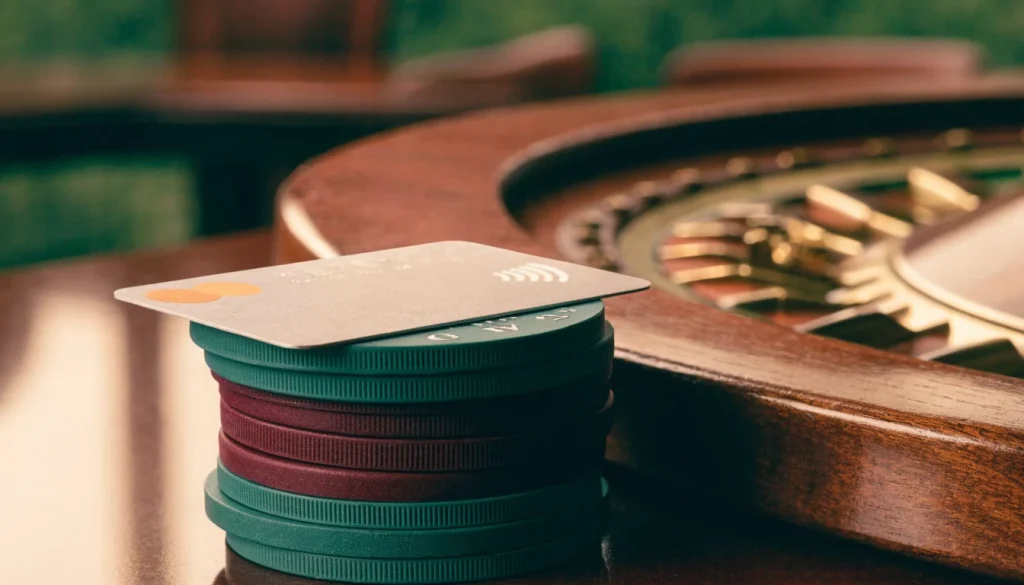
A card can fund a casino balance, but game rules, cashier availability and withdrawal routes are separate parts of the account.
Table of Contents
- Mastercard Deposits and Online Slots
- What Mastercard Acceptance Means at a Casino
- Can an Online Casino Take Mastercard?
- Mastercard Debit Cards: The UK Acceptance Boundary
- Using Mastercard for Slot Deposits
- When Mastercard Is Not the Only Payment Route
- Checking Mastercard Availability in the Cashier
- Why Mastercard Deposits Do Not Guarantee Mastercard Withdrawals
- Deposit Amounts, Limits and the Cost of Paying
- Mastercard Payments and GamStop Safeguards
- Memebet Casino Deposit Limits and Supported Payment Gateways
Mastercard Deposits and Online Slots
A Mastercard debit-card deposit and an online slot session belong to different parts of the same account. The card is a way to move money into a casino balance; the slot is a game governed by rules about how each spin may be offered. One does not rewrite the other. A payment logo cannot make a slot operate differently, and a slot’s features cannot establish whether a particular card can be used.
UK casinos commonly accept debit cards, including Mastercard. That makes a Mastercard debit card a familiar route for funding an account at many sites, but the act of depositing is only the beginning of the transaction’s story. Once funds are available in a gambling account, the rules governing play apply regardless of whether the balance came from a card or another permitted source.
This distinction matters because casino pages often place payment details and game descriptions close together. A site may present its cashier alongside a collection of slots, bonuses or other promotions, as though they were parts of one offer. They are not. The payment method concerns the account’s funding; the slot’s design concerns what happens after a stake is placed. A Mastercard deposit does not promise access to a particular game, feature or promotion.
Nor does the card itself decide whether a casino account can be used for real-money play. Remote gambling operators serving Great Britain must hold the relevant UK Gambling Commission licence, and legal online gambling in the UK is for adults aged eighteen or over at licensed sites. Operators must verify a customer’s age before allowing a deposit. These are conditions around the account and the operator, not special properties of Mastercard.
The separation becomes clearer when a spin begins. In Britain, online slot autoplay is banned. A player cannot set a machine to keep spinning automatically while they watch the balance change; each spin has to be initiated separately. The rule applies to online slots generally, not just to games funded by Mastercard. A debit card does not create an exception, nor does choosing one slot over another.
Casinos That Accept MiFinity in the UK: Payment Checks
Each online slot spin must also last at least 2.5 seconds. That minimum duration is a limit on the pace of play, not a payment-processing time. It does not tell a player how long a deposit takes, how quickly a casino updates an account, or how long a session should continue. It sets a floor beneath the speed of the game itself. The distinction is small in wording and substantial in effect: money can enter an account independently of the rhythm at which a slot is allowed to run.
There is a further limit on what can be inferred from the phrase “Mastercard slots”. It can mean slots played with money held in an account that was funded by a Mastercard debit card. It does not mean that Mastercard endorses the games, selects them, or supplies the rules under which they operate. Payment networks and game operators occupy separate roles, even when a casino’s interface makes the whole arrangement look seamless.
The rules on stake size also belong to the game, rather than to the card. For online slots, the maximum stake per game cycle is £5 for customers aged twenty-five and over, and £2 for those aged eighteen to twenty-four. The £5 limit for all adults took effect on 9 April 2025. These limits do not vary according to whether a casino account was funded with Mastercard. The card identifies a payment route; it does not enlarge the permitted stake.
That division reflects a broader British approach to gambling: regulate the machinery of participation as well as the movement of money. A card transaction can be ordinary banking infrastructure, while the activity funded by it is subject to rules designed specifically for gambling. The cashier and the slot window may sit a few clicks apart, but they answer to different questions. The first concerns how an account is funded. The second concerns the conditions under which a game may be played.
For someone looking at online slots alongside Mastercard deposits, the useful distinction is therefore not between one card-branded game and another. It is between payment eligibility and game regulation. Debit cards, including Mastercard, are commonly accepted by UK casinos; slot play remains subject to Britain’s restrictions on autoplay, minimum spin duration and stake size. The payment route is not a shortcut around them.
UK Slot Rules
Online slots in Britain are subject to a ban on autoplay, a minimum spin duration of 2.5 seconds, and maximum stakes of £5 (or £2 for those aged 18–24).
A deposit is not a licence to alter the game.
What Mastercard Acceptance Means at a Casino
When a UK casino says it accepts Mastercard, the useful meaning is narrow: Mastercard may be available as a way to fund a casino account. It is not a promise that every Mastercard will work, that the option will appear for every account, or that a payment will be accepted whenever it is attempted. Payment acceptance is a facility, not a personal guarantee.
Debit cards are a familiar part of the UK casino payment landscape, and casinos commonly accept Visa and Mastercard debit cards. That makes Mastercard a plausible route for a deposit, but the word “commonly” matters. A payment logo on a page indicates a method the casino may support; it does not settle whether the method is active for a particular customer or card product at that moment.
The distinction is easy to miss because payment brands are designed to look universal. A Mastercard mark is recognised across shops, transport and online services, encouraging the impression that the same card will behave the same way everywhere. Casino payments have a more conditional character. The operator’s current arrangements and the product attached to the card both matter. Acceptance is therefore better understood as compatibility between a casino account and an eligible payment route, not as a property belonging to the logo alone.
This is why descriptions of casinos accepting Mastercard can be informative without being definitive. Specialist reviews may list Visa and Mastercard among the methods shown by a site. Such a listing is a snapshot of reported payment information, not a standing confirmation of what a UK customer will see when making a deposit. Availability can change, and a general statement about Mastercard does not establish that each card product qualifies.
Casinos That Accept AstroPay in the UK: Payment Guide
The practical question is not simply whether a casino has ever supported Mastercard. It is whether the option is currently available within that casino account and whether the particular card is eligible. Those are separate points. A site may recognise a payment brand in general while a specific product does not meet its payment conditions; equally, a method described elsewhere may not be available in the account at the time of use. The difference sits in the details, where payment systems tend to keep their least theatrical but most consequential decisions.
The cashier is the relevant place to establish what the account can use. A site’s general payment information offers a broad indication; the options displayed in the account are closer to the live position. Even then, seeing Mastercard listed does not make every attempted transaction certain to succeed. The casino’s payment setup and the card’s eligibility still have to align. A rejected payment is not, by itself, proof that Mastercard is unsupported across the whole site.
This account-level view also helps make sense of searches for the best casinos with Mastercard or casino apps that accept it. The brand alone cannot distinguish one casino account from another. The useful comparison is whether Mastercard is presently offered for the relevant account, alongside the operator’s other terms and the payment information shown at the point of deposit. A polished page can describe a method broadly; the cashier supplies the more immediate answer.
Attention: A payment logo indicates a method the casino may support, but it does not guarantee that a specific card product is currently active or eligible for your account.
The same caution applies to phrases such as “instant banking” appearing beside Mastercard in casino descriptions. They refer to payment arrangements, not a universal promise about how every card transaction will behave. Mastercard is a card scheme, while the actual deposit depends on the product and on the operator’s live payment availability. Treating those labels as interchangeable can make a simple decision unnecessarily obscure.
There is a small cultural lesson in this routine uncertainty. A payment brand carries the reassuring authority of a familiar institution, while the casino account translates that broad recognition into a local permission: available here, for this account, under these conditions. Digital commerce likes to present itself as frictionless. In practice, the cashier remains a gate with a screen for a door.
So “accepts Mastercard” should be read as a useful starting point, not a complete description of payment compatibility. UK casinos commonly accept debit cards, including Mastercard, but current availability and card-product eligibility determine whether that general acceptance applies in a particular case. The logo opens the question. The account’s available payment options answer it.
Can an Online Casino Take Mastercard?
When choosing a casino for Mastercard payments in the UK, check that Mastercard is currently available for deposits and review the payout information. The details below provide a stated payout speed for each listed operator.
1. Chanze
Payout speed: 1-3 business days Chanze lists a payout speed of 1–3 business days.
2. Zombillion
Payout speed: 1-3 business days Zombillion lists a payout speed of 1–3 business days.
3. WinBeast
Payout speed: 1-3 business days WinBeast lists a payout speed of 1–3 business days.
4. Revery Play
Payout speed: 1-3 business days Revery Play lists a payout speed of 1–3 business days.
5. Amunbet
Payout speed: 1-3 business days Amunbet lists a payout speed of 1–3 business days.
6. EvoSpin
Payout speed: 1-3 business days EvoSpin lists a payout speed of 1–3 business days.
7. Dieselwin
Payout speed: 1-3 business days Dieselwin lists a payout speed of 1–3 business days.
8. Britsino
Payout speed: 1-3 business days Britsino lists a payout speed of 1–3 business days.
9. Jetsetspins
Payout speed: 1-3 business days Jetsetspins lists a payout speed of 1–3 business days.
10. NightWin
Payout speed: 1-3 business days NightWin lists a payout speed of 1–3 business days.
Yes, a Mastercard can be used at some UK online casinos, provided it is a debit card and the casino currently accepts that card for deposits. The logo alone does not settle the question: Mastercard is a payment network, while the account attached to the card determines whether it is a debit or credit product. For gambling, that distinction is decisive.
UK casinos commonly accept debit cards, including Mastercard. But credit-card payments for gambling are prohibited at UK-licensed sites. The rule took effect on 14 April 2020 and has not since been relaxed. A credit Mastercard therefore cannot be used to fund gambling at a licensed casino, even if the card works for ordinary online purchases.
That is not a technical preference chosen by individual casinos. It is a regulatory boundary. Remote gambling licensees serving the British market must operate within the UK rules, which bar credit-card gambling payments. A casino cannot make the prohibited transaction acceptable by displaying Mastercard alongside other payment symbols or by describing its cashier as flexible.
The practical answer to whether Mastercard works is consequently narrower than a simple yes or no. A debit Mastercard may be accepted; a credit Mastercard may not be used for gambling. The same network mark can appear on both products, so the name on the front of a card is not enough to identify its permitted use. The card account matters.
Casinos That Accept Upaycard in the UK: What to Check
This can make the phrase “Mastercard casino” sound more definite than it is. It describes a payment route, not a separate kind of casino, and it does not mean every Mastercard product is eligible. Nor does a site’s general mention of Mastercard prove that a particular transaction will be available. Acceptance can depend on the casino’s current arrangements and the card product involved.
There is a small but important difference between a payment brand and a payment source. Mastercard supplies the network; a bank or other issuer provides the card account. A debit card draws on funds held in an account, while a credit card offers borrowing. For gambling transactions at UK-licensed casinos, the latter route is closed. The visible logo is the same. The underlying arrangement is not.
The ban also reaches beyond a card used directly. Credit-card payments for gambling cannot be routed through a money service business to evade the restriction, and a wallet cannot be used where it allows credit-card funds to be spent on gambling. A different interface does not change the nature of the funds. The rule follows the payment, not merely the button pressed in a cashier.
Credit Ban
Credit-card payments for gambling are prohibited at UK-licensed sites; only debit cards are permitted for deposits.
So the answer is conditional, not mysterious: Mastercard debit may be usable at a UK online casino that supports it, while Mastercard credit is not an allowed gambling deposit method at a UK-licensed site. That distinction is the first thing to establish before treating a Mastercard symbol as an invitation to pay. A logo is not permission.
Mastercard Debit Cards: The UK Acceptance Boundary
A Mastercard logo answers only part of the question. In Britain, casinos commonly accept debit cards, including Mastercard, but the important distinction is the kind of card behind the payment. A debit card draws on money held in an account; a credit card provides borrowing. For gambling deposits at UK-licensed casinos, those categories do not lead to the same outcome.
The debit card is a familiar bridge between an ordinary bank account and a casino account. That familiarity helps explain why Mastercard appears among the payment methods accepted across the market. It does not make acceptance universal, nor does the logo alone establish that every Mastercard product can be used. The boundary begins with the card’s status: debit-card payments are commonly accepted, while credit-card payments for gambling are prohibited.
That rule has a date and a history. The regulator banned credit-card gambling on 14 April 2020, and the restriction has not been relaxed. Its purpose was to prevent gambling with borrowed money through credit cards. The distinction is therefore not a preference invented by an individual casino, or a temporary inconvenience in a cashier. It is part of the UK regulatory framework for licensed gambling.
Casinos That Accept Wirecard in the UK: Payment Guide
The practical result is that searches for online casinos accepting Mastercard debit cards point towards a genuine payment category, while the same card brand on a credit product does not make gambling deposits permissible. A familiar name can cover different products; the payment network is not the whole story. The account from which the card draws matters.
This is also why a card should not be judged by appearance alone. A Mastercard debit card and a Mastercard credit card may carry the same network branding, yet they sit on opposite sides of the UK gambling boundary. The casino’s acceptance of debit cards is not permission to use credit, and a credit product does not become a debit card simply because it bears the same logo or is saved alongside a bank account.
The rule is narrower than a ban on Mastercard. It does not mean that Mastercard debit payments are barred from UK casinos; debit cards remain commonly accepted. Nor does it mean that every site will accept every eligible card at every moment. Those are separate questions of availability and product eligibility. The dividing line discussed here is the legal one between debit and credit.
There is a small piece of social history in that distinction. Credit makes spending possible before the money exists in the account; the UK rule draws a boundary around that borrowed route to gambling. Debit leaves the transaction attached to funds already held. Regulation does not make gambling harmless, but it does make the permitted payment category more legible.
Card Eligibility
The critical factor for UK casino deposits is whether the Mastercard is a debit card, as credit products are legally barred.
For anyone comparing Mastercard-accepting casinos in the UK, the useful phrase is not simply “Mastercard accepted”. It is whether the card is a debit card. The network name opens the door only when the product behind it fits the rules. A logo is not a loophole.
Using Mastercard for Slot Deposits
A Mastercard debit-card deposit can put funds into a casino account from which online slots are available. That describes a route for moving money, not a special kind of slot. The card does not select the games, alter their mechanics or unlock a separate catalogue. UK casinos commonly accept debit cards, including Mastercard, but payment and play remain distinct parts of the account.
That distinction matters when a casino is described as a place for Mastercard slot play. The phrase can make it sound as though the payment brand has some relationship with the games themselves. It does not. A deposit method concerns the account’s cashier; the games are governed by their own rules and by the requirements applying to online slots in Britain. A site’s general support for Mastercard should not be read as a promise that every card product will work in every circumstance.
Nor does paying by Mastercard change how a slot may be played. Autoplay is banned for online slots in Britain. Each spin must last at least 2.5 seconds, so a sequence cannot be set to run unattended or compressed into a faster rhythm. These rules apply to the game experience, not to whether the balance arrived by card, bank transfer or another route.
The separation is easy to overlook because the deposit and the game sit close together on screen. A balance appears, a slot opens, and the transaction seems to belong to the activity that follows. In practice, the payment rail ends at the account balance. It does not confer a different pace of play or exempt a game from the limits imposed on British online slots. A card is not a gameplay feature.
Casinos That Accept Interac in the UK: What to Check
Searches for Mastercard casinos, slot games or mobile play often bundle those ideas together. The useful distinction is simpler: a casino may accept Mastercard debit deposits, while its slots remain subject to the same British rules as slots funded by any other permitted method. A mobile screen does not alter those rules either; the device is only the setting, not an exception.
The word “best” can also blur the question. It might refer to game choice, payment compatibility or the conditions attached to an account, none of which is established merely by seeing Mastercard mentioned. A slot catalogue cannot be judged from its deposit logo, and a payment option cannot be judged from the games listed beside it. The two are adjacent, not interchangeable.
For anyone comparing sites, the sensible reading of a Mastercard label is narrow: it indicates that debit-card payments may be supported, while the cashier determines whether the card is eligible at that time. The slot’s permitted features are a separate matter. In Britain, no autoplay, and no spin shorter than 2.5 seconds. The payment brand has no say in either rule.
When Mastercard Is Not the Only Payment Route
A Mastercard debit card is one way to fund a casino account, but it is not the only route that may appear in a UK cashier. Alternatives differ in what they do: some move money from a bank account, some use an e-wallet, and a prepaid voucher can serve deposits without providing a route back for winnings. The choice is less a contest of brands than a question of how the payment fits the account.
PayPal
Known for convenience, though use may make deposits ineligible for certain bonuses.
Bank Transfers
Direct bank-linked routes capable of providing instant deposits and fast withdrawals.
Paysafecard
A prepaid voucher used for deposits only; it cannot be used for payouts.
E-wallets
Services like Skrill and Neteller that may be excluded from some promotions.
PayPal is often associated with quick, convenient payments. A specialist casino review also notes that its use may make a deposit ineligible for a particular bonus. That is a promotion-specific condition, not a universal rule: bonus terms can treat payment methods differently, so the attraction of an offer and the preferred payment route may not align.
Open banking and bank transfers connect a casino transaction more directly to a bank account. A specialist review describes these routes as capable of providing instant deposits and fast withdrawals at many sites. Availability and timing still depend on the casino and the service involved; “bank transfer” names a family of arrangements, not a single clock. Bank-linked routes may appeal to those who prefer not to fund an e-wallet first.
Paysafecard is a different proposition. It is a prepaid voucher for deposits only, so it should not be treated as a two-way payment option. That distinction matters when comparing alternatives: a method that can put funds into an account may not be suitable for receiving a payout. The voucher’s appeal is separation from a bank-card transaction; its boundary is equally clear.
Skrill and Neteller are e-wallets available at some sites. A specialist casino review reports that these methods are often excluded from promotions, another reminder that payment eligibility and bonus eligibility are separate questions. An e-wallet can add an account between the bank and casino, which may suit someone who already uses that service, but it is not automatically the simplest route. Wallet funding rules matter too: UK-licensed casinos cannot accept wallet payments where the wallet allows credit-card funds to be used for gambling.
Casinos That Accept Tether in the UK: What to Check
There is no single best alternative to Mastercard for every account. PayPal may be convenient but affect bonus eligibility; an open-banking service or bank transfer may offer a direct bank route; Paysafecard is deposit-only; and an e-wallet may bring its own promotion conditions. Those are practical differences, not rankings. The payment method should be judged by whether it supports the intended transaction, what its terms say, and whether it suits the account holder’s own banking arrangements.
A familiar name is not enough. These routes are not interchangeable, and convenience has edges.
Checking Mastercard Availability in the Cashier
A casino’s payment page can name Mastercard without confirming that every Mastercard card can be used for a deposit. A specialist review may list Visa and Mastercard among the site’s methods, but that is a broad description, not a live check of the cashier. Availability can change, and card-product eligibility may differ. The practical test is the payment option shown inside the account.
That distinction matters because a logo describes a payment network, not necessarily the terms on which a particular card is issued. The cashier may display Mastercard while the selected card product is not eligible, or it may not offer the method for that account at that time. A general list cannot settle either point.
The cashier is therefore more useful than a promotional payment panel. Once signed in, the account holder can see which methods are currently offered for that account and whether Mastercard appears as a deposit choice. If it does, the payment screen is the place to check that the card details can be entered and the transaction can proceed. A method named on a public page is not proof that a deposit will be accepted.
Do
- Check the live cashier after signing in
- Verify the specific card product eligibility
- Rely on the options shown in the account
Don’t
- Assume a public logo guarantees acceptance
- Trust a general payment list as a live check
- Assume a site-wide listing proves every card works
There is a small but telling difference between a casino that says it takes Mastercard and one that makes Mastercard available in a particular cashier. The first statement is about the site’s advertised options; the second concerns the actual account and transaction. Payment pages tend to flatten those distinctions into neat logos. The cashier restores them.
A failed or absent option should not be treated as evidence that Mastercard is unavailable everywhere, any more than a site-wide listing proves it will work for every card. The relevant answer is specific to the casino, account and card product at the time of payment. Where the cashier does not show Mastercard, or the card is not accepted, the public list cannot override that result.
For anyone comparing casinos that accept Mastercard in the UK, the useful check is not simply whether the brand appears somewhere on the site. It is whether the logged-in UK cashier currently offers Mastercard for the intended deposit and accepts that card product. That is a narrower answer, but a more dependable one. Logos are not a transaction.
Why Mastercard Deposits Do Not Guarantee Mastercard Withdrawals
A Mastercard deposit and a Mastercard payout are separate stages, not two halves of a single promise. A casino may accept a debit-card payment into an account without being able to return a withdrawal to that card by the same route. The cashier’s deposit options therefore do not, by themselves, establish which withdrawal methods are available.
Casinos That Accept USDC in the UK: What to Check
UK anti-money laundering rules commonly require winnings to be returned to the original payment source. This closed-loop approach helps connect the funds going out with the funds that came in, rather than allowing a payout to be redirected without scrutiny. If more than one payment method has been used, the casino may need to apply its own payment and verification procedures before deciding how a withdrawal is handled.
That is why “Mastercard deposit” and “Mastercard withdrawal” should not be treated as interchangeable labels. A card may be suitable for funding an account while the casino’s rules or processing arrangements make another route relevant for the payout. The account’s cashier and withdrawal terms are the practical places to establish what applies; a general Mastercard logo is not a promise of a card-to-card return.
Speed also changes between the two directions. A specialist casino review describes card deposits as potentially instant, while a payout may take several business days. The difference is not necessarily a contradiction: a deposit can be authorised as it arrives, whereas a withdrawal can involve checks and a separate approval stage before funds are sent.
The same type of review notes that processing includes the casino’s internal approval and that a first withdrawal may take longer while verification is completed. KYC can therefore affect the time between requesting a payout and its release. Once a payment has been approved, the route it travels still matters; the visible balance changing is not the same as money reaching a bank account.
For anyone comparing casinos with Mastercard withdrawals in the UK, the useful distinction is between a site accepting Mastercard for deposits and its confirmed payout procedure. The original source may be the expected destination, but timing and eligibility still depend on the casino’s handling of the request and the account’s verification status.
Note: A Mastercard deposit does not guarantee a Mastercard withdrawal, as anti-money laundering rules and casino procedures may dictate the payout route.
A payment logo is not a timetable.
Deposit Amounts, Limits and the Cost of Paying
A Mastercard deposit does not have one standard minimum across UK casinos. A specialist review puts common starting points at £10–£20, with the amount depending on the payment method. That is a guide to reported practice, not a promise that every cashier will accept the same sum. A £5 deposit, for instance, should not be assumed possible just because a search result mentions it; the minimum displayed for the account and chosen method is the operative figure.
The upper boundary is less uniform still. A specialist review notes that maximum deposits can be set per transaction, per day or per month, and may vary with both the payment route and account status. A limit shown for one card or account therefore cannot be treated as a general Mastercard ceiling. The cashier’s stated amount matters more than a site-wide headline.
The visible deposit figure is only one part of the cost. A specialist review identifies several possible charges: a casino fee, a payment-provider fee, a fee from the card issuer or bank, a currency-conversion spread, and network costs. Which, if any, apply depends on the transaction and the parties handling it. A deposit in pounds may avoid conversion only when the casino account is also set to pounds; where currencies differ, the exchange rate can carry a cost even if no separate fee is displayed.
A conversion spread can be less obvious than a flat charge. The amount shown as deposited may not reveal the full cost of moving money between currencies, so the relevant comparison is the total debit against the balance credited, alongside any fees disclosed by the casino, provider or bank. No payment route can be labelled cheapest without those details and the amount being transferred.
These figures and charges are not fixed features of Mastercard itself. They sit at the intersection of the casino’s cashier settings, payment arrangements and the card account. The small print does the arithmetic.
Casinos That Accept Maestro in the UK
Mastercard Payments and GamStop Safeguards
A Mastercard logo in a casino cashier describes a payment option, not the operator’s relationship with GamStop. The two belong to different systems: one concerns how funds are paid in; the other concerns self-exclusion. A casino cannot be classified as covered by, or outside, GamStop simply because it accepts Mastercard.
That distinction matters in Britain, where remote gambling operators serving the market must hold a UK Gambling Commission licence. A site presenting itself as a Mastercard casino “not on GamStop” is not, by that description alone, a lawful alternative to a licensed operator. Offshore sites operate outside the UKGC system, and payment branding does not change that status. The label is not a safeguard.
UKGC rules also shape what happens inside a licensed account. Before a new customer makes a first deposit, the operator must prompt them to set a financial limit. Account-level controls must remain accessible, so limits are not merely a one-off screen encountered on the way to the cashier. They are part of the account’s ordinary machinery.
Licensed casinos must also provide responsible-gambling tools, including self-exclusion. GamStop membership and an operator’s own self-exclusion facilities are not interchangeable claims: the presence of one payment method confirms neither. A Mastercard deposit cannot reveal whether a site participates in the scheme, and a search result or promotional label cannot establish that it holds the required licence.
The relevant checks are therefore separate. A current UKGC operating licence concerns whether the operator may legally serve British customers; the cashier indicates whether a payment method is available; the account settings show what limit controls and self-exclusion tools are offered. Before depositing, the licence number should be checked against the UKGC public register. Payment convenience is a poor substitute for regulatory status.
For anyone already relying on self-exclusion, a site’s wording about GamStop should not be treated as permission to resume gambling. Mastercard is a route for a transaction, not a measure of whether gambling is safe or suitable. That difference is easy to blur in marketing. It remains a difference.
Are Visa and Mastercard deposits definitely debit cards?
UK casinos commonly accept Visa and Mastercard debit cards, and gambling with credit cards is prohibited. Check the cashier to confirm that your particular card product is eligible.
Why must withdrawals return to the deposit method?
Returning funds to the original payment source is a common anti-fraud and anti-money-laundering control. Using the same named account for deposits and withdrawals can also reduce avoidable transaction checks.
What is the fastest withdrawal method for UK casinos?
PayPal, open banking services and debit cards linked to fast payout systems are generally among the quickest options. The casino’s approval process and your verification status also affect the time.
Do UK casino withdrawals require verification?
Verification may be needed, particularly for a first withdrawal, and payouts can take longer while it is completed. Keeping your account information and payment method in your own name can help avoid basic ownership issues.
Why can a fast payout casino still delay my withdrawal?
A casino’s internal approval process can add time, and a withdrawal may take longer if your account is not fully verified. First withdrawals may also be delayed while verification is completed.
Are fast casino withdrawals guaranteed?
No. Withdrawal speed depends on the casino’s approval process and whether your account is fully verified.
Is Skrill available?
Yes, Skrill is available at some UK-friendly casino sites, though it may be excluded from promotions.
Memebet Casino Deposit Limits and Supported Payment Gateways

Supported Cryptocurrencies and Meme Token Deposits at Memebet
Memebet is crypto-first. Memebet supports Bitcoin, Ethereum, USDT and Dogecoin, and the wider Memebet ecosystem...
Memebet Casino Fast Crypto Withdrawals and UK Cashout Limits
Memebet supports a crypto-first payment model, including Bitcoin, Ethereum, USDT and Dogecoin. What this page...

Anonymous Crypto Casinos in the UK: What to Know
A low-document sign-up does not establish who runs a casino, which rules apply, or whether...

BNB Casino Comparison UK: What the Evidence Shows
BNB and BCH are different assets, so information about BCH deposits, withdrawals and transactions cannot...

Bitcoin Cash Casino Comparison in the UK
A practical look at licensing, offshore trade-offs, bonus terms, BCH transactions and how British rules...

Cardano ADA Casino Comparison UK: Licensing Rules
UK licensing rules prohibit cryptocurrency deposits at licensed casinos, while the available evidence does not...
UK Casino Sites That Accept Credit Cards: The Rules
The UK restriction applies to the source of gambling funds, not simply to the payment...

Casino Sites That Accept Debit Cards in the UK
Learn how card deposits work, what to check at the cashier, and why depositing by...

UK Casino Sites That Accept EcoPayz: What to Check
EcoPayz is now Payz, but a casino’s cashier is the place to confirm whether the...

Casino sites that accept Jeton in the UK: what to check
Jeton acceptance is operator-specific, and deposit access alone does not establish the withdrawal route or...

Skrill Casino Sites in the UK: Deposits and Withdrawals
Skrill availability varies by casino account, while deposits and withdrawals depend on the cashier’s rules...

Casinos that accept Apple Pay in the UK: what counts
Apple Pay uses a card in a digital wallet, while Boku charges a transaction to...

Casinos That Accept AstroPay in the UK: Payment Guide
AstroPay funds an account rather than a slot, while casino payment acceptance and bonus eligibility...

Casinos That Accept Bank Cheques in the UK
Boku is a mobile-billing deposit option, not cheque clearing; its limits, bonus exclusions and withdrawal...

Casinos That Accept Bank Transfer in the UK
Boku uses mobile billing or PAYG credit rather than a bank account, which affects how...

Casinos That Accept Bitcoin in the UK: Fees & Payouts
Explore how Bitcoin deposits, bonus conditions, UK gambling context and withdrawal routes can affect the...

Casinos that accept Boku in the UK: what to know
Boku remains a deposit option at some UK-licensed casinos, but availability varies by operator and...

Casinos That Accept CashToCode in the UK
CashToCode availability, bonus eligibility and payout methods can differ, so each casino’s cashier and promotion...

Casinos that accept Citadel in the UK: what to check
Payment pages can describe funding methods, but the current cashier is where Citadel availability for...

Casinos That Accept Click2Pay in the UK
A casino’s game catalogue and cashier are separate, and deposit access does not by itself...

ClickandBuy at UK Casinos: Checking Payment Claims
A cashier listing, promotion terms and withdrawal rules answer different questions about whether ClickandBuy can...

Casinos That Accept Debit Cards in the UK
UK casino debit card payments connect an account to funds held through a bank, with...

Casinos That Accept Diners Club in the UK
UK casino card options can vary by account, and deposit availability does not confirm that...

Dogecoin Casinos in the UK: What to Check
A practical way to assess whether Dogecoin covers the full account transaction, rather than just...

Casinos That Accept E-Checks in the UK: How to Verify
Payment labels can differ from the methods UK casinos actually describe, so identifying the route...

Casinos That Accept E-Cheques in the UK
A general payment list is not confirmation of e-cheque support; the cashier shows which deposit...
Casinos that accept Entropay in the UK: what to check
Entropay availability depends on a casino’s current cashier options, while deposits and withdrawals can involve...

Casinos That Accept Ethereum in the UK: What to Check
General cryptocurrency labels do not establish whether Ethereum is available at a casino or what...

Casinos That Accept E-Wallets in the UK: How They Work
See how wallet availability, matching deposit and payout routes, processing waits and fees affect casino...

Casinos That Accept Giropay in the UK
A method’s presence in general casino information does not confirm it is available to a...

Casinos That Accept Google Pay in the UK
Google Pay availability depends on the casino cashier, linked card and transaction, while deposit and...

Casinos That Accept iDEAL in the UK: What to Check
The guide separates game availability from payment support and explains what must be confirmed before...

Casinos That Accept InstaDebit in the UK
A payment method may be accepted for deposits while remaining excluded from a particular casino...

Casinos That Accept Interac in the UK: What to Check
Interac acceptance, deposit and withdrawal routes, and slot-game access are separate details that need confirmation....

Casinos That Accept Klarna in the UK: What to Check
Klarna availability can vary by casino and transaction, and a deposit option does not necessarily...

Casinos That Accept Litecoin in the UK: What to Check
A cryptocurrency label alone does not confirm Litecoin support; availability can depend on the specific...

Casinos That Accept Maestro in the UK
A casino’s card label may not cover every card product, and the cashier’s listed options...

Casinos That Accept MiFinity in the UK: Payment Checks
Payment availability and promotion terms are separate, so a cashier listing alone cannot confirm whether...

Casinos that accept Monzo UK: separating fact from Boku
Boku deposits use a mobile account and do not establish whether a casino accepts a...

Casinos That Accept MuchBetter in the UK
MuchBetter availability, bonus eligibility and withdrawal terms are separate checks, even when they appear alongside...

Casinos That Accept Neosurf in the UK: Payment Guide
Neosurf may be listed without providing a usable deposit route, and cashier terms do not...

Casinos That Accept Neteller in the UK: What to Check
A Neteller payment option does not guarantee bonus eligibility, and withdrawal approval comes before funds...

Casinos That Accept Pay N Play in the UK
Pay N Play is often a loose label for phone deposits, while account checks, withdrawals...

Casinos That Accept PayPal in the UK: Payment Guide
PayPal and Pay by Phone are different payment routes, and a listed deposit method does...

Casinos that accept POLi in the UK: what to check
A cashier listing does not guarantee bonus eligibility or mean the same route is available...

Casinos that accept Revolut UK: deposits and terms
Card acceptance, promotion eligibility and withdrawals can follow different rules, so a successful deposit does...

Casinos That Accept Ripple XRP in the UK
A general crypto listing may not mean XRP is available in the live cashier or...

Casinos that accept Siru Mobile in the UK
Siru availability varies by operator, and a phone deposit is distinct from licensing, withdrawals and...

Casinos That Accept Solana in the UK: Payment Guide
A Solana payment option is distinct from a crypto-linked card and does not, by itself,...

Casinos That Accept Tether in the UK: What to Check
A practical look at payment availability, token networks, conversion costs and the checks that shape...

Ukash Casinos in the UK: Deposit Alternatives and Checks
Compare possible alternatives to Ukash, including their bonus conditions and whether the same payment method...

Casinos That Accept Upaycard in the UK: What to Check
A casino may accept a payment method without supporting Upaycard or allowing deposits made with...

Casinos That Accept USDC in the UK: What to Check
USDC availability, slot eligibility and promotion terms are separate questions, while deposit and withdrawal routes...

Casinos That Accept Visa in the UK: How It Works
Visa debit can fund an account at UK casino cashiers, but availability, limits, withdrawals and...

Casinos That Accept WebMoney in the UK: What's Known
The guide distinguishes WebMoney from Boku and explains what cashier listings, bonus terms and withdrawal...

Casinos That Accept Bank Transfers in the UK
The guide explains how bank-account payment routes work in casino cashiers and what can affect...

Casinos That Accept Wirecard in the UK: Payment Guide
Payment availability, promotion eligibility and withdrawal handling are separate questions, so the cashier and account...

Casinos That Accept Zimpler in the UK: What to Check
Zimpler can indicate a way to deposit, but it does not confirm game access, casino...

Instant Bank Transfer Casinos in the UK: How Payments Work
Bank transfers depend on each operator’s cashier, and deposit speed does not determine how quickly...

iPad Casinos in the UK: Payments, Apps and Games
A practical look at using casino sites on an iPad, including cashier terms, app availability,...

Mobile Top-Up Casino UK: How Phone Deposits Work
A mobile deposit is charged to a phone account rather than a bank card, with...

Online Casinos That Accept SMS Deposits: Boku Explained
A practical guide to Boku deposits, SMS authorisation, phone-bill charges, site limits and why mobile...

Pay by Mobile Casinos UK: How Phone Deposits Work
A practical look at cashier support, SMS confirmation, phone-credit limits and why withdrawals need a...

Pay by phone bill at UK casinos: how deposits work
Payforit links a casino deposit to a mobile number and SMS approval, making it a...

Pay by Phone Casinos UK: Deposits and Payments
Payforit links a casino deposit to a mobile account, with approval by text and funding...

Payforit Mobile Casinos in the UK: How It Works
Payforit is a mobile-focused casino payment route, with account terms and the withdrawal process to...

Casinos That Accept Direct Banking: Payment Guide
Direct banking can mean different payment routes, and the method selected may affect how deposits,...

TRON (TRX) Casino Comparison in the UK
The key distinction is whether an operator is UK-licensed, since licensed gambling operators cannot accept...

UK crypto casinos with no KYC: rules and risks
The guide separates UK-licensed gambling from offshore offers and explains the limits of BCH payments,...