Casinos That Accept E-Wallets in the UK: How They Work
 Available in GB
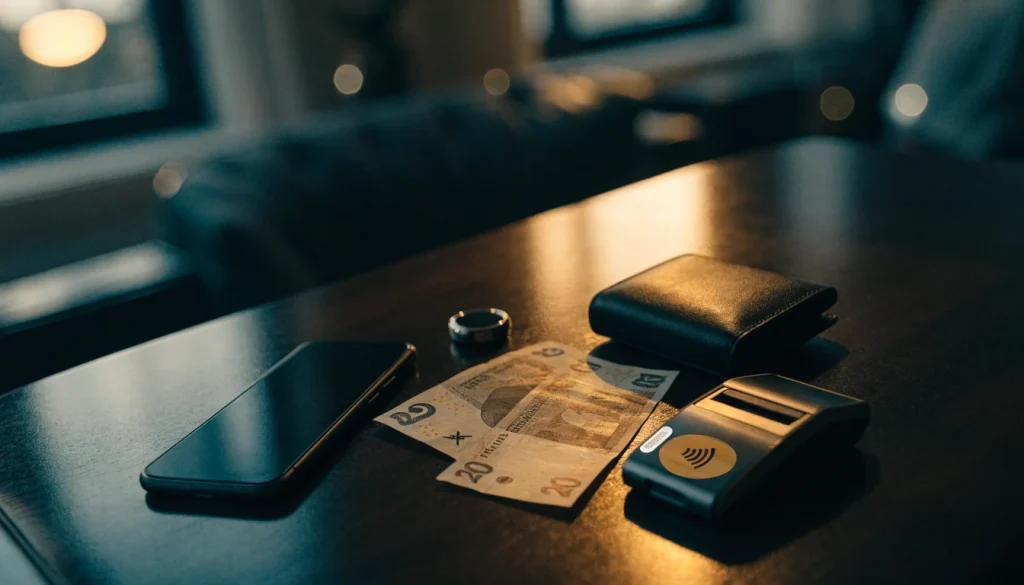
See how wallet availability, matching deposit and payout routes, processing waits and fees affect casino payments.
Table of Contents
- How E-Wallets Fit Into the UK Casino Cashier
- What Makes an E-Wallet Casino a Better Fit
- Deposit Limits and the Financial Controls Around Them
- Why the Deposit Account and Payout Route Should Match
- From Deposit to Withdrawal: Where the Wait Happens
- Fast Deposits Do Not Guarantee Fast Payouts
- Wallet Names Change; Cashier Availability Still Matters
- Wallet Fees, Exchange Rates and the Cost of Moving Money
- Checking a Casino’s Payment Options Before Paying In
- When a Wallet Cannot Be Used for Gambling
- Memebet Casino Deposit Limits and Supported Payment Gateways
How E-Wallets Fit Into the UK Casino Cashier
A UK casino cashier is less a single payment system than a menu of routes between a player’s money and a gambling account. Debit cards sit beside bank-based options and e-wallets, but they do not all work in the same way. The distinction matters: a payment method can look like one more button on a screen while representing a different relationship with the money being moved.
A debit card authorises a payment through the card network and the account connected to it. Visa and Mastercard debit cards are commonly accepted by UK casinos. The card is familiar because it is already used for ordinary purchases; in a casino cashier, it remains a direct card payment rather than a separate wallet balance. The label on the cashier may be brief, but the underlying route is recognisable.
An e-wallet adds another layer. It is a payment account or service used to make a transaction, rather than the debit card itself. Where a casino accepts a wallet, the payment passes through that service. The wallet therefore appears in the cashier as its own route, distinct from selecting a card brand or initiating a bank transfer. This is the basic appeal of an e-wallet online casino: the casino account can be funded through a payment service sitting between the player and the operator.
When choosing a UK casino that accepts e-wallets, check the payout details as well as the available payment options. This list highlights the payout speed stated for each operator.
1. Chanze
Payout speed: 1-3 business days Chanze lists a payout speed of 1–3 business days.
2. Zombillion
Payout speed: 1-3 business days Zombillion lists a payout speed of 1–3 business days.
3. WinBeast
Payout speed: 1-3 business days WinBeast lists a payout speed of 1–3 business days.
4. Revery Play
Payout speed: 1-3 business days Revery Play lists a payout speed of 1–3 business days.
5. Amunbet
Payout speed: 1-3 business days Amunbet lists a payout speed of 1–3 business days.
6. EvoSpin
Payout speed: 1-3 business days EvoSpin lists a payout speed of 1–3 business days.
7. Dieselwin
Payout speed: 1-3 business days Dieselwin lists a payout speed of 1–3 business days.
8. Britsino
Payout speed: 1-3 business days Britsino lists a payout speed of 1–3 business days.
9. Jetsetspins
Payout speed: 1-3 business days Jetsetspins lists a payout speed of 1–3 business days.
10. NightWin
Payout speed: 1-3 business days NightWin lists a payout speed of 1–3 business days.
That middle layer gives wallets a different place in the payment landscape, not an automatic advantage. A cashier’s list may contain several familiar names, yet the categories behind them are not interchangeable. A debit card draws on its connected account; a bank transfer moves money through the banking system; a wallet is used as a separate payment service. The screen reduces these distinctions to options. The transaction does not.
Open banking and bank transfers belong to the bank-based side of the menu. They can provide instant deposits and fast withdrawals at many sites, according to a specialist review. That is a reported feature, not a universal timetable: the route offered and its performance depend on the particular cashier and transaction. “Bank transfer” also describes a broad family of processes, rather than one identical experience everywhere.
The cashier is therefore a small map of how money can enter a gambling account. Cards bring the familiar retail-payment route; bank-based services connect the transaction more directly with banking; wallets introduce a separate payment service. None of those labels alone tells the whole story. A method’s presence says that a route is offered, not that every route handles deposits and withdrawals in the same way.
This is why the phrase “online casinos with e-wallets” can conceal a useful distinction. It may mean that a wallet appears among deposit methods, but a payment route should not be assumed to serve every stage of a transaction merely because it appears in the cashier. The cashier is the practical reference point for what the operator currently presents. The name of a method, by itself, is not a complete description of its role.
There is also a cultural difference in the routes. Cards inherit the habits of everyday spending: a plastic card, or its digital equivalent, is already woven into retail life. Bank transfers draw on the older idea that money belongs in an account and is moved from one institution to another. E-wallets reflect a more mediated arrangement, in which a payment service becomes a distinct place through which a transaction passes. The technology changes; the old question remains: which institution is handling the money at each step?
Casinos That Accept Giropay in the UK
That question helps explain why casinos present several payment types instead of treating them as one generic “pay” button. A cashier is not merely a convenience panel. It is where the operator’s available routes become visible, and where the player can see whether the casino supports a card, bank-based payment or wallet service. The available menu differs between operators, so a general description of UK casino payments cannot stand in for an individual cashier.
For anyone comparing online casinos that accept e-wallets in the UK, the first useful distinction is simply between a wallet and the other routes beside it. The wallet is not a debit card, even when a card may be involved elsewhere in its use; nor is it the same thing as a bank transfer. Treating those categories separately makes the cashier easier to read without turning a list of payment logos into a promise about every transaction.
The result is a mixed payment landscape rather than a single preferred route. Debit cards remain a common part of it, bank-based options have their own role, and e-wallets occupy the space between a casino account and a payment service. A wallet may be one option among several, not a different kind of casino. The cashier supplies the particulars. A logo is only the beginning.
What Makes an E-Wallet Casino a Better Fit
A wallet can be familiar, quick to use and still be a poor fit for a particular casino account. The useful comparison is not a popularity contest between payment brands. It is a check of the conditions attached to the wallet: whether the casino accepts it for the intended transaction and whether using it changes access to a promotion.
Casinos That Accept iDEAL in the UK: What to Check
Acceptance is the first practical distinction. A payment logo on a general information page does not, by itself, establish that the method is available to every customer or for every purpose. The cashier and the casino’s payment terms are more relevant to the account in question. One wallet may appear as a deposit choice while another is absent; availability can also differ between casinos using the same brand. An e-wallet casino is therefore a better fit only when its cashier offers the wallet that the customer actually holds.
That sounds like a small administrative point. It is the difference between choosing a method and discovering, at the point of payment, that the choice was theoretical. Casinos are not obliged to make their cashiers uniform, and a familiar name does not confer universal acceptance.
The second check concerns promotions. Payment methods can carry conditions that are easy to miss when attention is fixed on a welcome offer or other promotion. The offer’s terms may specify which deposits qualify, which methods are excluded, or whether a particular payment route changes eligibility. A wallet should not be treated as promotion-neutral unless the relevant terms say so. The practical value of an offer depends on its conditions, not merely on its headline.
PayPal is widely valued for speed and convenience. A specialist review has reported, however, that PayPal deposits may be excluded from bonus eligibility at some casinos. That is a reported condition, not a rule applying across the market. The distinction matters: the name of a payment method cannot answer whether a particular offer accepts it. The promotion’s terms do.
Specialist reviews have also reported that Skrill and Neteller are available at some sites and may be excluded from promotions. Again, this describes conditions reported for particular casinos, not a blanket prohibition. The same wallet can be treated differently from one offer to another, and sometimes from one operator to another. The cashier establishes whether the wallet is offered; the promotion rules establish whether its use qualifies.
Do
- Check if the wallet is available for the specific transaction
- Review promotion terms to see if the deposit method is permitted
Don’t
- Assume a wallet is available just because a logo is on a general page
- Assume a bonus applies simply because the casino accepts the wallet
A useful comparison consequently has two separate questions, not one. Is the wallet available for the transaction? And, if a promotion is relevant, does that promotion permit a deposit made through it? Combining these into a single assumption—“the casino accepts this wallet, so the offer applies”—is how an otherwise ordinary payment choice becomes a surprise.
The answer can also depend on what matters most to the account. Someone uninterested in promotions may care chiefly about whether the wallet is accepted and suits their normal way of managing payments. Someone considering an offer has an additional condition to weigh: the deposit method must meet the offer’s rules. Neither preference makes one wallet inherently better. The fit is specific to the casino, the offer and the purpose of the deposit.
This is why labels such as “best e-wallet casino” can obscure more than they clarify. A site may support a well-known wallet yet attach terms that make it unsuitable for a particular promotion. Another may list a different wallet that better matches the intended use. The more meaningful comparison is between the available cashier option and the written conditions that govern it, rather than between reputations in the abstract.
A careful read of payment and promotion terms is less glamorous than a bonus banner. It is also more informative. The wallet’s presence is only the beginning; the conditions decide whether it is a sensible choice.
Casinos that accept Revolut UK: deposits and terms
Deposit Limits and the Financial Controls Around Them
A deposit figure in a casino cashier can look like a simple threshold. In practice, it sits inside several different controls: the smallest amount accepted for one payment, the largest amount allowed by a particular route, and any financial limit attached to the customer’s account. These are not interchangeable. An e-wallet casino may display a low entry point without that figure explaining what can be deposited later, or what limit applies across a longer period.
Specialist casino reviews describe minimum deposits as starting in the £10–£20 range, with the selected payment method affecting the figure. That is a reported starting range, not a UK-wide tariff. The cashier’s terms matter: a minimum can differ between payment options at the same casino, and the amount shown before a transaction is more useful than a general description of what casinos accept. For someone comparing casinos that take e-wallet deposits, the smallest permitted payment is one practical detail, but it says little by itself about the account’s broader controls.
Maximums are less tidy. A casino may set a ceiling for a single transaction and separate limits for daily or monthly deposits. Those ceilings can vary with the payment method and the status of the account. A maximum shown for one route should not be assumed to apply to another, and a figure attached to a particular account may not describe what a new customer can deposit. The apparent simplicity of a cashier menu conceals a set of different boundaries.
Transaction maximums are restrictions on what a payment route or account will accept, whereas financial limits are customer-set controls used to manage deposits.
This distinction also separates an operator’s transaction ceiling from a customer’s own financial limit. A transaction maximum is a restriction on how much a payment route or account will accept. A financial limit is a control set at account level to manage deposits. The two can overlap in effect, but they do not serve the same purpose: the first defines what the system permits, while the second gives the customer a way to constrain their own spending.
For remote gambling licensees, that account-level control is part of the required opening process. New customers must be asked to set a financial limit before making their first deposit, and accessible controls must remain available within the account. The prompt is not merely a cashier note or a suggestion buried in general terms. It places a decision about deposit limits before the first payment, when no money has yet crossed into the gambling account.
That order matters. Payment interfaces tend to make the transaction itself conspicuous: select a method, enter an amount, confirm. A limit-setting step asks for a different kind of attention, directed not at the next payment but at the scale of deposits more broadly. The rule makes that consideration part of entry to the account rather than an afterthought. Quietly consequential.
The account controls should therefore be read alongside the cashier’s minimum and maximum figures. A low minimum does not make a casino more suitable if the account-level settings do not fit the customer’s intended boundaries. Likewise, a high transaction maximum is not an instruction to deposit that amount; it describes what may be technically accepted under the applicable conditions. The numbers answer different questions.
Ukash Casinos in the UK: Deposit Alternatives and Checks
For e-wallet deposits, the distinction is especially easy to miss because the payment method can seem like the whole decision. It is only one layer. The casino’s minimum for that wallet, any applicable maximum, and the financial limit set on the account each describe a separate part of the arrangement. The range reported by specialist reviews offers a rough point of orientation, but the live cashier and account controls determine the terms that apply to a particular customer.
A careful comparison is less about finding the largest permissible deposit than understanding which boundary is being displayed. Transaction, daily and monthly ceilings may differ; account status can also affect the available maximum. The financial limit, meanwhile, is a customer-level control that operators must make accessible. Clear distinctions make the figures easier to interpret—and harder to mistake for a recommendation.
Why the Deposit Account and Payout Route Should Match
A payment route is not just a way into a casino account. It also leaves a record of who supplied the funds and where they came from. That connection matters when money is later returned. UK anti-money laundering rules generally require a payout to go back to the original payment source, so a deposit made through an e-wallet does not necessarily leave the player free to nominate an unrelated destination for the return.
UK anti-money laundering rules generally require payouts to be returned to the original payment source.
This is the logic behind closed-loop rules: money should move back along a recognisable route, rather than detaching from its origin as soon as it reaches the casino. The rule serves a security purpose, not a preference for one brand of wallet over another. A casino needs to be able to relate the transaction to the customer and the payment account involved.
The simplest arrangement is often one named account used consistently for deposits and withdrawals. When the casino profile and the e-wallet belong to the same person, the basic ownership details line up. That reduces the scope for avoidable questions about whose money entered the account or who should receive it back. It does not guarantee that every transaction will be frictionless; it makes the most elementary part of the picture clearer.
Names matter. A difference between the customer’s account details and the name attached to a payment method can complicate the transaction, even where the difference has an innocent explanation. Shared accounts, another person’s wallet, or a payment route registered under a different name can create the same problem. The casino is not merely processing a convenient transfer; it is handling funds under rules intended to make their origin and destination traceable.
That can feel formal beside the ordinary ease of opening an e-wallet. Digital payments make money appear to travel without much ceremony. Regulation restores some of the ceremony: the payment account is expected to have an identifiable owner, and the return journey is expected to make sense in light of the outward one. A neat paper trail is less glamorous than instant access. It is also rather more useful when something does not line up.
For an e-wallet casino, the practical point is not simply whether the wallet appears in the cashier. Its account holder and the casino customer should be the same person, and the wallet should be treated as part of a consistent payment path. Using someone else’s account may seem like a harmless workaround, but it introduces an ownership mismatch at the very point where the operator needs clarity.
Casinos That Accept E-Checks in the UK: How to Verify
The original-source principle can also affect expectations about alternatives. If a payment route cannot receive a return, or if a different destination is proposed, the casino may need to establish why the usual route is not being used. Alternative arrangements can involve further checks. That is not the same as saying that a change will always be refused; it means the change is not automatically interchangeable with the original payment source.
There is a broader social bargain in this routine. Gambling payments are allowed within a regulated system, but that system expects money to remain legible: identifiable at entry, linked to an account holder, and traceable on its way back. The player’s convenience is only one part of the design. The other is limiting opportunities for funds to be moved through accounts that do not belong to the customer whose gambling account received them.
For casinos that accept e-wallets in the UK, consistency is therefore more than tidiness. A single account in the customer’s own name, used for both sides of the transaction, is often the cleanest route. Not a loophole.
From Deposit to Withdrawal: Where the Wait Happens
An e-wallet can move a deposit into a casino account without much ceremony. A withdrawal has another stage: before money leaves, the casino may need to approve the request. The time attached to a payout therefore covers more than the movement of funds between payment services. It also includes the operator’s own review.
That distinction matters when comparing casino sites that accept e-wallet deposits in the UK. A payment option can appear straightforward at the cashier, yet the withdrawal process still depends on what happens inside the casino after a request is made. The wallet is one part of the route, not the whole timetable.
A specialist casino review reports that processing can take longer for a first withdrawal while verification is completed. That delay is tied to the account review, rather than necessarily to a fault with the wallet. If the casino has not finished checking the account, approval may remain pending before the payout is released.
Casinos That Accept Tether in the UK: What to Check
The same review identifies two factors behind withdrawal speed: the casino’s internal approval process and whether the account is fully verified. Those conditions can affect the interval before a payment provider even becomes part of the journey. Once the casino approves a request, the money still has to travel through the selected payment route; the review stage and the later transfer are separate parts of the process.
This is why a headline description of a payment method cannot, by itself, explain how long a withdrawal will take. “E-wallet” names the route, not the status of the account or the operator’s queue. The practical difference may lie in whether verification has already been completed and how promptly the casino handles approval.
First payouts are particularly revealing. They can bring the account review into view at the same moment that a customer is waiting for money to arrive. Later requests may not involve the same unfinished verification, but the casino’s approval remains part of the process. A quick-looking cashier, then, is not a promise about every stage that follows.
For people weighing the best online casinos that accept e-wallet deposits, withdrawal arrangements deserve attention alongside the deposit facility. The relevant question is not simply whether a wallet appears among the payment options, but whether the account is ready for a payout to be reviewed. These are administrative steps, but they shape the experience as surely as the visible payment buttons do.
The wait has more than one gate.
Fast Deposits Do Not Guarantee Fast Payouts
A payment can arrive at a casino account almost at once and still take markedly longer to return. A specialist review describes debit-card deposits as potentially instant, while a payout to a card may take several business days. The two movements use the same familiar piece of plastic, but they are not mirror images: money entering a gambling account and money leaving it travel through different stages.
That difference matters when comparing online casino sites that accept e-wallets in the UK. A cashier’s deposit options show how funds can be added; they do not, by themselves, establish how quickly a withdrawal will reach a wallet or bank account. Speed is a property of the route in both directions, not a label attached to the method.
Deposit speed does not guarantee payout speed; money entering an account and money leaving it travel through different stages and internal approval processes.
A specialist review identifies PayPal, open banking services and debit cards connected to fast payout systems as methods that can sit among the quicker withdrawal routes. This is a description of possible relative speed, not a promise that every casino offers each route or that every transaction will move at the same pace. The destination account and the casino’s available payment arrangements still matter.
E-wallet deposits can therefore look particularly swift without settling the more consequential question of withdrawal timing. The convenience is visible at the point of entry; the return journey is less so. For anyone comparing online casinos that accept e-wallet deposits, the withdrawal method and its stated processing arrangements deserve as much attention as the deposit button. A quick confirmation on screen is not the same as money received.
Bank transfers make the distinction especially clear. A specialist review notes that delivery may be affected by the bank’s cut-off times, weekends and currency conversion. A transfer initiated at one point in the working day may not be handled like one sent later, and a weekend can interrupt the ordinary sequence. Conversion adds another step, even where the casino account and bank account are both accessible.
These differences also explain why a list of top online casinos that accept e-wallets cannot sensibly be judged by deposit speed alone. A fast deposit may suit the immediate transaction, while the useful comparison is whether the available withdrawal route fits the same expectations. The cashier is only half the journey.
For some players, the attraction of a wallet is the separation it creates between a casino balance and a bank account. For others, the deciding feature is how quickly winnings can be received. Those priorities need not coincide. A method that makes paying in feel effortless may still leave the slower part of the transaction untouched.
Instant in. Not necessarily out.
Casinos that accept Apple Pay in the UK: what counts
Wallet Names Change; Cashier Availability Still Matters
Payment brands have histories, and casino cashiers do not always display them in ways that make those histories obvious. EcoPayz became Payz in 2022, so an older reference to EcoPayz may point to the same service now presented under its newer name. The change is easy to miss when a page, an account or a player’s recollection has not kept pace with the brand.
That distinction matters when looking for a UK e-wallet casino. A familiar name in an old guide is not proof that the method is still available at a particular casino, and a renamed service may appear under Payz rather than EcoPayz in the payment menu. The cashier is the practical record of what that operator currently offers.
Jeton illustrates a different problem: the name has not disappeared, but its reach is narrow. A specialist review describes Jeton as available at only a handful of UK online casinos in 2026. That is a snapshot of limited availability, not a promise that any particular casino will accept it. A wallet can remain part of the UK casino vocabulary while being absent from most individual cashiers.
There is a small cultural afterlife in payment names. A brand survives in conversation, comparison pages and saved account details; the cashier, meanwhile, is governed by the operator’s present arrangements. The two records can diverge. The name may be recognisable. The route may not be there.
For e-wallet casinos in the UK, the useful distinction is therefore between a provider’s continued existence and its acceptance by a specific casino. Payz’s former name helps explain why older references may look unfamiliar; Jeton’s limited reach shows why recognition alone is not enough. Neither point settles availability for an individual account. The live payment menu does.
That check is especially relevant when a list uses a former brand name or presents a wallet as broadly available. The label can be accurate historically and still be unhelpful at the moment of payment. In a cashier, the current name and the actual listing matter more than a brand’s place in the archive.
Wallet Fees, Exchange Rates and the Cost of Moving Money
An e-wallet can make a casino payment look like a single transaction. In practice, the money may pass through several sets of terms: the casino’s cashier, the wallet provider, and, where currency conversion is involved, the exchange rate applied along the way. A payment that shows no obvious charge at the first step is not necessarily cost-free overall.
A specialist review of e-wallet casino payments identifies several possible costs: a casino fee, a charge from the payment provider, an issuer or bank fee, a currency-conversion spread, or a network fee. These are not automatic charges on every transaction. Which ones apply depends on the payment route and the accounts involved, so a fee displayed by one party cannot be treated as the full price.
The exchange rate deserves particular attention when the wallet balance and casino account use different currencies. The conversion may be built into the rate rather than shown as a separate line item. A specialist review notes that this spread can exceed a visible flat fee. The comparison is therefore not simply “fee” against “no fee”: it is the total amount lost between the funds leaving one account and the value credited to the other.
This is why there is no single cheapest method for everyone using e-wallet casinos in the UK. A provider’s published charge may matter for one route, while another route’s currency spread or bank charge matters more. Network costs may enter the calculation too. The same payment option can produce a different total when the amount, currency, or participating institutions change.
For a fair comparison, the relevant figure is the cost attached to the actual transaction: casino charge, provider fee, any issuer or bank fee, exchange-rate spread, and network cost where applicable. The cashier and the wallet’s own terms may reveal different parts of that picture. A neat headline fee is only one piece.
The arithmetic is less tidy than the button.
Checking Payment Options
- Confirm the wallet appears as an available option in the live cashier
- Check that the account currency matches the intended payment route
- Verify the minimum and maximum deposit limits for the selected method
Checking a Casino’s Payment Options Before Paying In
A payment method shown on a general information page is not necessarily available when a particular account reaches the cashier. Payment menus can vary by operator and may change, so the live options shown after sign-in are more useful than a static list of e-wallet casino sites in the UK. The cashier is where a broad claim meets the account in front of it.
A specialist casino review may list Visa and Mastercard, but that does not establish that either card is currently available to every UK customer or that every card product will be eligible. The cashier is the place to confirm what can actually be selected for that account. A familiar logo is not a transaction.
Currency deserves the same attention. A specialist review may state that a casino supports GBP, but the account’s own currency setting should be checked before the first payment. If the account and payment route use different currencies, conversion can enter the transaction; the amount ultimately debited or credited may then differ from the figure initially displayed. That is a compatibility issue, not a decorative setting.
For an e-wallet, the practical check is whether the wallet appears as an available option for that account and whether the account currency is supported. The same principle applies to cards and other payment routes: a method’s name on an information page does not, by itself, confirm that it can be used in the current cashier. Payment availability is account-specific. So is currency.
This makes any e-wallet casino list in the UK a starting point for checking, not a substitute for it. A page can help identify methods worth looking for, while the cashier confirms what the operator currently offers. Before a transaction, the payment option and the currency displayed for the account should agree with the intended route. If they do not, the apparent convenience of a listed method can dissolve into a declined payment or an unexpected conversion.
The useful information is rarely the longest list. It is the match between the method shown, the account’s currency and the transaction the cashier is prepared to process. Verify first. Pay second.
When a Wallet Cannot Be Used for Gambling
An e-wallet appearing in a casino cashier does not make every way of funding that wallet acceptable for gambling. The relevant distinction is not simply between a card and a wallet, but between the source of the money and the route it takes.
Credit-card payments for gambling have been banned in the UK since 14 April 2020. The restriction has not been relaxed. It also reaches money routed through a payment service: a wallet cannot be used for gambling where it allows credit-card funds to be used for that purpose. Putting an intermediary between the card issuer and the casino does not change the character of the payment.
That boundary matters because e-wallets are often presented as a separate payment category. They are separate in the cashier, but not exempt from the rules governing the funds behind them. A wallet funded from an eligible source may be accepted, while credit-card money cannot be made permissible merely by passing through the wallet first.
For remote gambling licensees, the practical requirement is therefore more specific than listing a wallet among accepted methods. The payment route must not enable credit-card payments for gambling, including credit-card funding routed through a money service business. If a wallet’s features allow such funds to be used for gambling, the casino cannot accept that wallet payment for the transaction.
The rule is not a general ban on e-wallets, nor does it mean that every wallet balance is treated as credit. It draws a line around a particular source of funds and the use made of them. A payment label is no loophole.
Why can a fast-payout casino still delay my withdrawal?
A quick payment method does not skip the casino’s approval process. First withdrawals can take longer while verification is completed, and withdrawals may be delayed if your account is not fully verified.
Are fast casino withdrawals guaranteed?
No. Withdrawal speed depends on the casino’s approval process, whether your account is verified, and the payment route; even a card deposit that is instant can have a payout that takes several business days.
Is Skrill available?
Yes, Skrill is offered at some UK-friendly casino sites and is a common deposit option. Check the casino’s cashier and terms, as availability varies and Skrill may be excluded from promotions.
What is the current minimum deposit?
The minimum deposit usually starts at £10–£20, depending on the payment method.
Which method has the lowest fees?
There is no universal lowest-fee method. Compare casino and provider charges, any bank or issuer fees, currency conversion spread, and network costs for the amount you plan to deposit or withdraw.
Are Visa and Mastercard deposits definitely debit cards?
Visa and Mastercard debit cards are commonly accepted, but check the cashier for the eligibility of your specific card product. UK casinos cannot accept credit cards for gambling under the ban introduced on 14 April 2020.
Memebet Casino Deposit Limits and Supported Payment Gateways
Supported Cryptocurrencies and Meme Token Deposits at Memebet
Memebet is crypto-first. Memebet supports Bitcoin, Ethereum, USDT and Dogecoin, and the wider Memebet ecosystem...
Memebet Casino Fast Crypto Withdrawals and UK Cashout Limits
Memebet supports a crypto-first payment model, including Bitcoin, Ethereum, USDT and Dogecoin. What this page...

Anonymous Crypto Casinos in the UK: What to Know
A low-document sign-up does not establish who runs a casino, which rules apply, or whether...

BNB Casino Comparison UK: What the Evidence Shows
BNB and BCH are different assets, so information about BCH deposits, withdrawals and transactions cannot...

Bitcoin Cash Casino Comparison in the UK
A practical look at licensing, offshore trade-offs, bonus terms, BCH transactions and how British rules...

Cardano ADA Casino Comparison UK: Licensing Rules
UK licensing rules prohibit cryptocurrency deposits at licensed casinos, while the available evidence does not...
UK Casino Sites That Accept Credit Cards: The Rules
The UK restriction applies to the source of gambling funds, not simply to the payment...

Casino Sites That Accept Debit Cards in the UK
Learn how card deposits work, what to check at the cashier, and why depositing by...

UK Casino Sites That Accept EcoPayz: What to Check
EcoPayz is now Payz, but a casino’s cashier is the place to confirm whether the...

Casino sites that accept Jeton in the UK: what to check
Jeton acceptance is operator-specific, and deposit access alone does not establish the withdrawal route or...

Skrill Casino Sites in the UK: Deposits and Withdrawals
Skrill availability varies by casino account, while deposits and withdrawals depend on the cashier’s rules...

Casinos that accept Apple Pay in the UK: what counts
Apple Pay uses a card in a digital wallet, while Boku charges a transaction to...

Casinos That Accept AstroPay in the UK: Payment Guide
AstroPay funds an account rather than a slot, while casino payment acceptance and bonus eligibility...

Casinos That Accept Bank Cheques in the UK
Boku is a mobile-billing deposit option, not cheque clearing; its limits, bonus exclusions and withdrawal...

Casinos That Accept Bank Transfer in the UK
Boku uses mobile billing or PAYG credit rather than a bank account, which affects how...

Casinos That Accept Bitcoin in the UK: Fees & Payouts
Explore how Bitcoin deposits, bonus conditions, UK gambling context and withdrawal routes can affect the...

Casinos that accept Boku in the UK: what to know
Boku remains a deposit option at some UK-licensed casinos, but availability varies by operator and...

Casinos That Accept CashToCode in the UK
CashToCode availability, bonus eligibility and payout methods can differ, so each casino’s cashier and promotion...

Casinos that accept Citadel in the UK: what to check
Payment pages can describe funding methods, but the current cashier is where Citadel availability for...

Casinos That Accept Click2Pay in the UK
A casino’s game catalogue and cashier are separate, and deposit access does not by itself...

ClickandBuy at UK Casinos: Checking Payment Claims
A cashier listing, promotion terms and withdrawal rules answer different questions about whether ClickandBuy can...

Casinos That Accept Debit Cards in the UK
UK casino debit card payments connect an account to funds held through a bank, with...

Casinos That Accept Diners Club in the UK
UK casino card options can vary by account, and deposit availability does not confirm that...

Dogecoin Casinos in the UK: What to Check
A practical way to assess whether Dogecoin covers the full account transaction, rather than just...

Casinos That Accept E-Checks in the UK: How to Verify
Payment labels can differ from the methods UK casinos actually describe, so identifying the route...

Casinos That Accept E-Cheques in the UK
A general payment list is not confirmation of e-cheque support; the cashier shows which deposit...
Casinos that accept Entropay in the UK: what to check
Entropay availability depends on a casino’s current cashier options, while deposits and withdrawals can involve...

Casinos That Accept Ethereum in the UK: What to Check
General cryptocurrency labels do not establish whether Ethereum is available at a casino or what...

Casinos That Accept Giropay in the UK
A method’s presence in general casino information does not confirm it is available to a...

Casinos That Accept Google Pay in the UK
Google Pay availability depends on the casino cashier, linked card and transaction, while deposit and...

Casinos That Accept iDEAL in the UK: What to Check
The guide separates game availability from payment support and explains what must be confirmed before...

Casinos That Accept InstaDebit in the UK
A payment method may be accepted for deposits while remaining excluded from a particular casino...

Casinos That Accept Interac in the UK: What to Check
Interac acceptance, deposit and withdrawal routes, and slot-game access are separate details that need confirmation....

Casinos That Accept Klarna in the UK: What to Check
Klarna availability can vary by casino and transaction, and a deposit option does not necessarily...

Casinos That Accept Litecoin in the UK: What to Check
A cryptocurrency label alone does not confirm Litecoin support; availability can depend on the specific...

Casinos That Accept Maestro in the UK
A casino’s card label may not cover every card product, and the cashier’s listed options...

Casinos That Accept Mastercard in the UK
A card can fund a casino balance, but game rules, cashier availability and withdrawal routes...

Casinos That Accept MiFinity in the UK: Payment Checks
Payment availability and promotion terms are separate, so a cashier listing alone cannot confirm whether...

Casinos that accept Monzo UK: separating fact from Boku
Boku deposits use a mobile account and do not establish whether a casino accepts a...

Casinos That Accept MuchBetter in the UK
MuchBetter availability, bonus eligibility and withdrawal terms are separate checks, even when they appear alongside...

Casinos That Accept Neosurf in the UK: Payment Guide
Neosurf may be listed without providing a usable deposit route, and cashier terms do not...

Casinos That Accept Neteller in the UK: What to Check
A Neteller payment option does not guarantee bonus eligibility, and withdrawal approval comes before funds...

Casinos That Accept Pay N Play in the UK
Pay N Play is often a loose label for phone deposits, while account checks, withdrawals...

Casinos That Accept PayPal in the UK: Payment Guide
PayPal and Pay by Phone are different payment routes, and a listed deposit method does...

Casinos that accept POLi in the UK: what to check
A cashier listing does not guarantee bonus eligibility or mean the same route is available...

Casinos that accept Revolut UK: deposits and terms
Card acceptance, promotion eligibility and withdrawals can follow different rules, so a successful deposit does...

Casinos That Accept Ripple XRP in the UK
A general crypto listing may not mean XRP is available in the live cashier or...

Casinos that accept Siru Mobile in the UK
Siru availability varies by operator, and a phone deposit is distinct from licensing, withdrawals and...

Casinos That Accept Solana in the UK: Payment Guide
A Solana payment option is distinct from a crypto-linked card and does not, by itself,...

Casinos That Accept Tether in the UK: What to Check
A practical look at payment availability, token networks, conversion costs and the checks that shape...

Ukash Casinos in the UK: Deposit Alternatives and Checks
Compare possible alternatives to Ukash, including their bonus conditions and whether the same payment method...

Casinos That Accept Upaycard in the UK: What to Check
A casino may accept a payment method without supporting Upaycard or allowing deposits made with...

Casinos That Accept USDC in the UK: What to Check
USDC availability, slot eligibility and promotion terms are separate questions, while deposit and withdrawal routes...

Casinos That Accept Visa in the UK: How It Works
Visa debit can fund an account at UK casino cashiers, but availability, limits, withdrawals and...

Casinos That Accept WebMoney in the UK: What's Known
The guide distinguishes WebMoney from Boku and explains what cashier listings, bonus terms and withdrawal...

Casinos That Accept Bank Transfers in the UK
The guide explains how bank-account payment routes work in casino cashiers and what can affect...

Casinos That Accept Wirecard in the UK: Payment Guide
Payment availability, promotion eligibility and withdrawal handling are separate questions, so the cashier and account...

Casinos That Accept Zimpler in the UK: What to Check
Zimpler can indicate a way to deposit, but it does not confirm game access, casino...

Instant Bank Transfer Casinos in the UK: How Payments Work
Bank transfers depend on each operator’s cashier, and deposit speed does not determine how quickly...

iPad Casinos in the UK: Payments, Apps and Games
A practical look at using casino sites on an iPad, including cashier terms, app availability,...

Mobile Top-Up Casino UK: How Phone Deposits Work
A mobile deposit is charged to a phone account rather than a bank card, with...

Online Casinos That Accept SMS Deposits: Boku Explained
A practical guide to Boku deposits, SMS authorisation, phone-bill charges, site limits and why mobile...

Pay by Mobile Casinos UK: How Phone Deposits Work
A practical look at cashier support, SMS confirmation, phone-credit limits and why withdrawals need a...

Pay by phone bill at UK casinos: how deposits work
Payforit links a casino deposit to a mobile number and SMS approval, making it a...

Pay by Phone Casinos UK: Deposits and Payments
Payforit links a casino deposit to a mobile account, with approval by text and funding...

Payforit Mobile Casinos in the UK: How It Works
Payforit is a mobile-focused casino payment route, with account terms and the withdrawal process to...

Casinos That Accept Direct Banking: Payment Guide
Direct banking can mean different payment routes, and the method selected may affect how deposits,...

TRON (TRX) Casino Comparison in the UK
The key distinction is whether an operator is UK-licensed, since licensed gambling operators cannot accept...

UK crypto casinos with no KYC: rules and risks
The guide separates UK-licensed gambling from offshore offers and explains the limits of BCH payments,...